
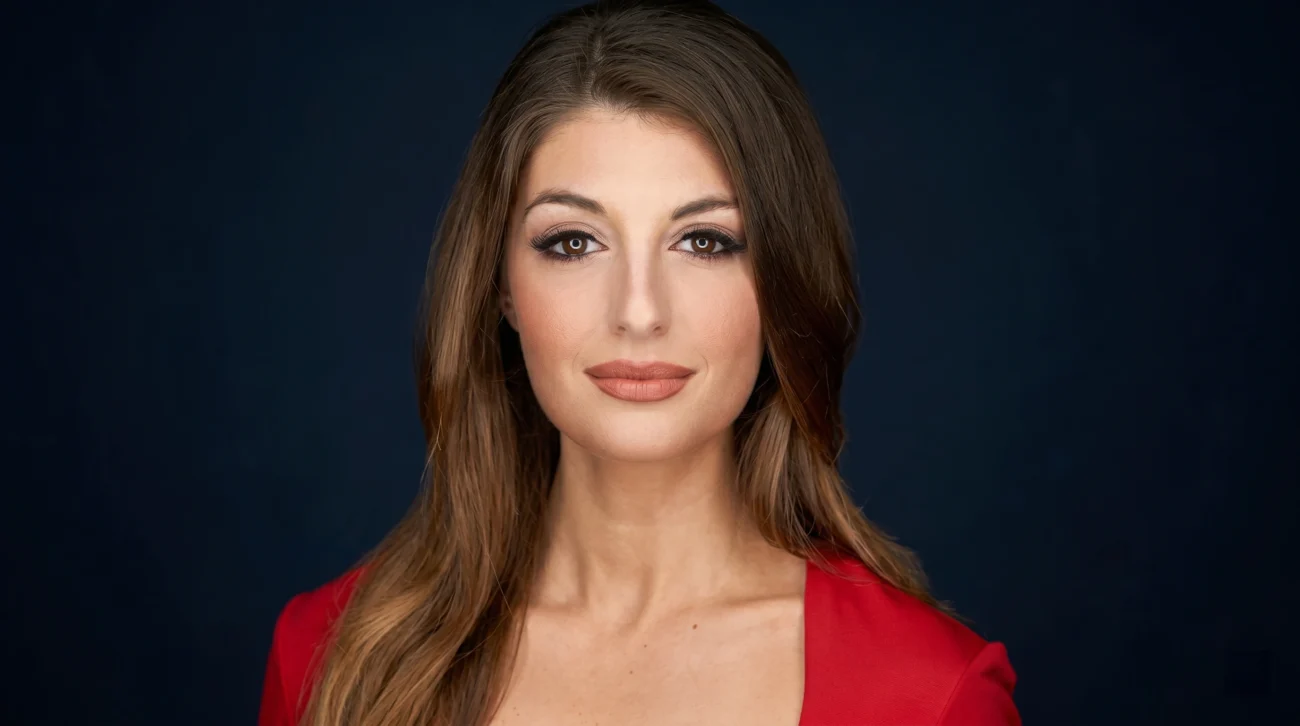
Helena Humphrey built her public reputation in the kind of journalism that rarely allows for a soft landing. She has reported and anchored through terror attacks, political unrest, global health emergencies, and the grinding uncertainty of international news, often with the calm, direct tone viewers look for when events are confusing. To many audiences, she is familiar as a BBC journalist and international broadcaster; to others, she is the multilingual reporter whose career has moved through Deutsche Welle, NBC-related global coverage, humanitarian communications, and live event moderation. Her story is not a celebrity biography built around spectacle. It is the story of a journalist shaped by languages, field experience, public service, and the discipline of explaining difficult stories clearly.
Who Is Helena Humphrey?
Helena Humphrey is a British broadcast journalist, anchor, correspondent, and moderator known for international news coverage. Her work has been linked publicly with BBC News, Deutsche Welle, NBC-related international reporting, ITN-associated freelance presenting, and humanitarian communications connected to organizations such as the Red Cross and the United Nations. She has built a career around global affairs rather than entertainment reporting, with a focus on politics, crisis response, human rights, public health, conflict, and social movements. That combination has made her a recognizable figure among viewers who follow international television news.
Humphrey’s profile is different from that of many presenters because her path into journalism did not begin only inside a newsroom. Before becoming widely known on international television, she worked in humanitarian communications, including during the West African Ebola crisis. That experience matters because it placed her close to the human consequences of global emergencies before she became a familiar face explaining them on air. It also helps explain why her professional identity is often described through both journalism and public-interest storytelling.
Public information about Humphrey is strongest around her career and education, while her private life is less documented. She has not built her public image around family exposure, lifestyle coverage, or celebrity media. As a result, responsible profiles have to separate what is known from what is repeated without proof. The verified picture is still substantial: she is a multilingual journalist with experience across major international broadcasters and high-pressure reporting environments.
Early Life and Family Background
Helena Humphrey has kept much of her early life private, and that restraint deserves respect. Public accounts identify her as British, and her later career suggests an upbringing and education that valued language, mobility, and international awareness. One of the most revealing family details she has shared publicly concerns her mother, who worked as a midwife. Humphrey has linked that influence to a belief in treating people with equal dignity, a principle that fits naturally with her later work in humanitarian communication and journalism.
That family influence is useful because it offers a glimpse of the values behind the presenter’s polished professional surface. A midwife’s work brings a person close to ordinary families during moments of risk, fear, and joy. For a journalist, that kind of example can shape how stories are framed, especially when reporting on people who are often reduced to statistics. Humphrey’s best-known professional territory, from crisis reporting to global health, often requires attention to people who are living through decisions made far away from them.
There is no reliable public record confirming every detail sometimes attached to Humphrey’s childhood online. Some biography pages claim specific dates, places, and family information, but many do not show clear sourcing. The safest account is that she is a British journalist whose early formation included a strong family example of service and a clear interest in languages. That may sound less dramatic than an overfilled online profile, but it is more honest and more useful.
Education and First Ambitions
Humphrey graduated from university in 2009 with a degree in languages, a detail she has discussed publicly in interviews. The timing mattered because 2009 was a hard year for graduates entering the job market after the global financial crisis. For someone trained in languages, the path ahead could have led toward diplomacy, translation, teaching, business, aid work, or journalism. Humphrey’s eventual career drew from several of those worlds at once.
Her language background became one of the strongest foundations of her professional life. Public profiles have described her as fluent in English, French, and German, which gave her access to different media cultures and reporting environments. In international broadcasting, language is not just a résumé detail. It affects how a journalist reads local sources, speaks with guests, understands political context, and avoids flattening foreign stories into English-language shorthand.
The choice to study languages also suggests early curiosity about the world beyond Britain. That curiosity later became practical expertise as Humphrey moved into international communications and reporting. Many journalists learn geography through assignments, but Humphrey’s education gave her a head start in understanding how culture and meaning shift across borders. It became part of her professional signature.
Humanitarian Work Before the Newsroom
Before her television career became the main public reference point, Humphrey worked in humanitarian communications. Public speaker profiles connect her with work involving the United Nations and the Red Cross, including field experience during the Ebola outbreak in Guinea. That period was part of one of the most serious global health emergencies of the 2010s, with Guinea, Liberia, and Sierra Leone at the center of the crisis. For communications professionals, the challenge was not only to explain the disease but to build trust in places where fear, misinformation, and grief were spreading quickly.
That experience likely changed how Humphrey understood public information. In a health emergency, words can carry immediate consequences. A message that is unclear, late, or mistrusted can affect whether people seek care, follow safety advice, or believe institutions. Journalism is not the same as aid communications, but both fields require accuracy, empathy, and an understanding of how information moves through communities.
The move from humanitarian communications to journalism was not a leap away from public service. It was a shift into a field with different obligations: independence, verification, challenge, and public accountability. Humphrey’s later work retained the crisis literacy of someone who had seen emergency response from inside the system. That background gave her a useful perspective when covering global health, migration, conflict, and the political choices that shape human suffering.
Breaking Into International Broadcasting
Humphrey’s career in international broadcasting developed across several outlets rather than through one narrow institutional path. She became associated with Deutsche Welle, Germany’s international broadcaster, where she appeared as a news anchor and presenter. DW’s global news audience gave her exposure to a wide range of stories, from European politics to U.S. affairs and international crises. It also placed her in a newsroom built for viewers who expect context beyond domestic headlines.
Her work at Deutsche Welle helped establish her as a presenter who could handle serious, fast-moving news. She anchored international coverage and was linked publicly with programs including The Day, DW’s current-affairs format focused on the biggest stories and their wider meaning. That kind of program requires more than reading headlines cleanly. It demands the ability to interview guests, frame events, and keep viewers oriented through complex material.
The DW years also helped show how her language skills translated into a broadcasting career. Working in a European international newsroom requires an awareness of national perspectives that do not always align. A story about Washington, Berlin, Brussels, Moscow, or Paris can look different depending on the audience watching. Humphrey’s profile grew in that space, where clarity and context matter as much as speed.
Reporting Through Crisis and Political Unrest
Humphrey’s public biographies describe a career marked by crisis reporting and live coverage of major breaking stories. Professional profiles have linked her to coverage of terror attacks, protest movements, U.S. politics, immigration, reproductive rights, economic issues, and tensions involving the United States and Iran. These assignments fit the work of a global correspondent whose beat is less a single country than the impact of power across borders. They also explain why viewers often associate her with calm explanation during charged events.
Some of the most serious stories attached to her public profile include attacks and unrest in Europe. Reports and speaker biographies have referenced her work around the Münster car attack, the Berlin Christmas market attack, the Strasbourg Christmas market attack, the Yellow Vest protests in France, and separatist unrest in Barcelona. These were not light assignments, and they demanded careful language at moments when early information could be incomplete or wrong. A journalist in that setting has to report what is known while resisting the pressure to fill every gap.
That discipline is one of the quiet skills of live news. Viewers often remember the anchor’s composure, but the harder work is editorial judgment under pressure. Terror attacks, protests, and political violence attract rumor, speculation, and emotional reaction within minutes. Humphrey’s career has repeatedly placed her in environments where restraint is not a lack of urgency but a professional necessity.
BBC News and the Washington Role
For many readers searching her name, Helena Humphrey is most closely associated with BBC News. Public interviews have identified her as an anchor and correspondent connected with the BBC’s Washington, D.C. bureau. That role placed her close to American politics at a time when U.S. decisions were watched intensely around the world. For the BBC’s global audience, Washington is not just the capital of one country; it is a source of stories that affect diplomacy, markets, war, climate policy, migration, and democracy debates far beyond the United States.
The Washington connection also fits Humphrey’s broader career pattern. She has often worked at the intersection of domestic events and international consequences. A court ruling, presidential election, congressional fight, or foreign-policy decision in the United States can quickly become a global story. A correspondent covering that beat needs to explain the American system without assuming that viewers already know its customs, institutions, or language.
BBC visibility also changed how many viewers encountered her. Unlike correspondents known mainly through bylines, television journalists become familiar through tone, presence, and repetition. A viewer may watch Humphrey during a major story and then search for her biography because they recognize the authority but not the background. That is why the most useful profile of her must go beyond a job title and explain the professional formation behind the on-air role.
NBC, ITN, and Work Beyond One Network
Humphrey’s public career has also included work described in connection with NBC-related global reporting and freelance presenting for clients including ITN. Several professional profiles present her as a journalist whose work has moved across broadcasters, formats, and countries. That may appear confusing to readers who expect a single permanent employer, but it is common in modern international television. Experienced correspondents often combine staff roles, freelance assignments, event hosting, documentary-style work, and live news presentation.
Her NBC-linked work has been described in relation to major global stories such as the COVID-19 pandemic and the Black Lives Matter movement. Those stories demanded both speed and sensitivity, especially because they combined public health, race, protest, policing, politics, and social trust. They also required broadcasters to explain events to audiences outside the places where they were unfolding. Humphrey’s international background made that kind of translation between local event and global meaning a natural part of her work.
Her ITN-associated freelance presenting also points to a flexible professional model. ITN has long been a major producer of British television news, and work connected to it carries industry weight. Still, the exact shape of freelance arrangements is often less visible than staff biographies, so claims should be stated carefully. What is clear is that Humphrey’s career has not depended on one logo alone.
Public Speaking, Moderation, and Global Forums
Alongside her broadcasting work, Humphrey has built a public profile as a moderator and event host. Speaker profiles present her as someone suited to conversations about international relations, development, human rights, Europe, climate, culture, and global affairs. That work is a natural extension of broadcast journalism, especially for presenters who are comfortable managing live conversations with experts, policymakers, and public figures. A skilled moderator has to listen closely, keep time, press for clarity, and make complex subjects accessible to an audience.
Moderation is sometimes treated as secondary to reporting, but it draws on many of the same muscles. The host must know enough to ask sharp questions without becoming the center of the event. She must also keep a conversation useful when guests are cautious, technical, or politically careful. Humphrey’s background in live news, humanitarian work, and international affairs gives her a strong base for that role.
This part of her career also reflects how journalism has changed. Many respected broadcasters now work across television, digital video, conferences, podcasts, panels, and institutional events. Their credibility depends on whether audiences trust their preparation and judgment outside a studio setting. Humphrey’s move across these formats shows the broader career path of a modern global journalist.
Personal Life, Marriage, and Children
Helena Humphrey has kept her personal life largely out of the public spotlight. There are online claims about her marital status, husband, children, and family arrangements, but many of those claims appear on biography sites that do not offer strong sourcing. Because marriage and children are private matters, they should not be stated as fact without confirmation from Humphrey herself or a reliable public record. A respectful biography can acknowledge public curiosity without turning unverified details into public truth.
That privacy is not unusual for journalists. Many television presenters are visible in people’s homes every day but still maintain firm boundaries around their family lives. The audience may feel familiar with them, yet that familiarity comes from professional exposure rather than personal access. Humphrey seems to have chosen a public identity centered on work, not domestic life.
The distinction matters because search demand often rewards speculation. People search for spouses, ages, children, salaries, and homes, and low-quality sites often supply answers whether or not they are verified. A serious profile should resist that pattern. In Humphrey’s case, her career gives readers plenty to understand without leaning on unsupported personal claims.
Income, Salary, and Net Worth
There is no reliable public figure for Helena Humphrey’s salary or net worth. Some online biography pages publish estimates, but those figures are not supported by visible financial records, contract details, property filings, or direct confirmation. For a journalist who has worked across staff roles, freelance broadcasting, moderation, and event hosting, income may come from multiple sources. That makes casual estimates even less dependable.
Her likely income sources are easier to identify than her total wealth. They may include broadcast journalism, freelance presenting, correspondent work, moderation, public speaking, and media consulting or hosting assignments. Senior international broadcasters and moderators can earn well, especially when they combine newsroom work with conferences and private events. But without verified numbers, any exact figure would be guesswork.
The honest answer is that Humphrey’s net worth is not publicly confirmed. That may disappoint readers looking for a quick number, but accuracy matters more than filling a blank. Money claims in online celebrity biographies are often among the weakest parts of the public record. A better measure of Humphrey’s standing is the level of organizations and broadcasters associated with her work.
Public Image and Reporting Style
Humphrey’s public image is built around composure, intelligence, and international credibility. She is not known for courting controversy or turning herself into the story. Her work tends to place the event, guest, or affected community at the center, while her role is to clarify and guide. That approach suits international news, where audiences often need orientation more than performance.
Her reporting style also reflects the value of restraint. In breaking news, especially around violence or political unrest, an overconfident tone can mislead viewers. Humphrey’s background suggests comfort with uncertainty, which is one of the marks of a serious journalist. The best live reporting does not pretend to know more than it does; it tells viewers what is confirmed, what is developing, and what still needs care.
There is also warmth in the way her career is often described. Colleagues and speaker profiles emphasize humanitarian experience, global perspective, and the ability to handle serious subjects with clarity. Those descriptions fit a journalist who has worked close to human suffering without making her own reaction the focus. It is a difficult balance, and it is central to her appeal.
Current Status and Recent Work
Helena Humphrey remains publicly associated with international journalism, BBC-linked broadcasting, moderation, and global affairs work. Public information in recent years has placed her in Washington, D.C., connected with BBC News, while other professional profiles continue to describe her broader freelance and correspondent background. Because media roles can change quickly and public biographies are not always updated at the same pace, the most accurate wording is careful. She is best described as a British international journalist and broadcaster known for BBC work and a wider career across global news outlets.
Her current profile also shows the modern shape of media authority. A journalist may appear on television, host a panel, moderate a development forum, and contribute to coverage across more than one platform. Viewers may know the face from one network, while professional audiences know the same person as a moderator or conference host. Humphrey occupies that space between broadcast visibility and expert convening.
What has remained consistent is her subject area. She continues to be associated with global affairs, politics, humanitarian questions, public health, and international crisis coverage. That consistency matters more than a single current job label. Her professional identity is rooted in explaining how large events affect real lives.
Lesser-Known Details That Explain Her Career
One of the most meaningful details about Humphrey is the timing of her graduation. Leaving university in 2009, during the aftershock of the global financial crisis, meant entering adulthood at a moment when many conventional career routes were unstable. For someone with a languages degree, flexibility became a strength rather than a fallback. Humphrey’s later career shows that she turned international skills into practical experience across aid work and journalism.
Another detail is the continuity between her mother’s profession and her own. A midwife works at the threshold of private life and public health, where care, trust, and calm judgment matter. Humphrey’s journalism often sits near those same themes, though in a different field. The connection should not be overstated, but it offers a real insight into the values that seem to shape her public work.
Her language ability also deserves more attention than it usually receives in short biographies. English, French, and German are not only useful tools for travel or presentation. They open doors to sources, archives, interviews, and cultural context that monolingual reporting can miss. In an international newsroom, that skill can change the quality of the journalism.
Why Helena Humphrey Matters
Helena Humphrey matters because she represents a kind of journalism that is both visible and underexplained. Viewers often focus on anchors as screen presences, but the stronger story is the preparation behind the performance. Humphrey’s background in languages, humanitarian communications, field reporting, and live broadcasting gives her work a deeper base than a simple presenter label suggests. She is part of a generation of journalists whose careers cross borders as naturally as the stories they cover.
Her career also speaks to the need for trustworthy international reporting. The world’s biggest stories no longer stay inside national boundaries, if they ever did. A virus that begins in one place, a protest movement in another, or a policy decision in Washington can quickly affect people across continents. Journalists like Humphrey help audiences follow those connections without losing sight of the human beings inside them.
There is also value in the way she has kept her private life separate from public work. In a media culture that often rewards oversharing, that boundary feels almost old-fashioned. It reminds readers that public interest and public curiosity are not the same thing. A person can be a legitimate subject of biography without surrendering every private detail.
Frequently Asked Questions
Who is Helena Humphrey?
Helena Humphrey is a British broadcast journalist, anchor, correspondent, and moderator known for international news coverage. She has been publicly associated with BBC News, Deutsche Welle, NBC-related global reporting, ITN-linked freelance presenting, and humanitarian communications. Her work focuses on global affairs, politics, crisis reporting, human rights, and public health.
Is Helena Humphrey a BBC journalist?
Helena Humphrey is widely known for her BBC News work, and public interviews have identified her as an anchor and correspondent connected with the BBC’s Washington, D.C. bureau. Other professional profiles also describe work across Deutsche Welle, NBC-related reporting, and freelance presenting. Because media roles can change, the safest current description is that she is a British international journalist known for BBC work and broader global broadcasting.
Where is Helena Humphrey from?
Helena Humphrey is British, though many specific details about her hometown and childhood are not firmly established in reliable public sources. She has shared that her mother worked as a midwife, a detail that helps explain the values of service and dignity often linked to her work. Her later education and career show a strong international focus.
What did Helena Humphrey study?
Helena Humphrey studied languages and graduated from university in 2009. Public profiles have described her as fluent in English, French, and German. That language background became a major advantage in her international journalism career, especially in European and global news environments.
Is Helena Humphrey married?
Helena Humphrey has not made her private life a central part of her public profile. Some online pages make claims about marriage or children, but many do not provide strong sourcing. Without confirmation from Humphrey or a reliable public record, those personal details should be treated as unverified.
What is Helena Humphrey’s net worth?
Helena Humphrey’s net worth is not reliably public. Online estimates should be treated with caution because they usually do not show evidence such as contracts, financial records, or confirmed income. Her known income sources likely include journalism, presenting, moderation, and public speaking, but exact figures are not verified.
What is Helena Humphrey doing now?
Helena Humphrey remains associated with international journalism, broadcasting, and moderation. Recent public information has linked her with BBC News and Washington-based reporting, while professional profiles also describe wider work across global media and events. Her current public identity remains centered on global affairs, live news, and international public-interest topics.
Conclusion
Helena Humphrey’s biography is best understood through work rather than spectacle. She has built a career across languages, humanitarian crises, international newsrooms, and live broadcasts that demand calm judgment. Her public presence is measured, but the path behind it is active, varied, and shaped by serious subjects.
The most reliable portrait of her is not the one built from unsourced claims about age, salary, or private relationships. It is the portrait of a journalist who learned to communicate across borders before becoming a familiar face on global television. Her experience in humanitarian settings gave her a close view of crisis before she reported on crisis for international audiences.
That is why Helena Humphrey continues to draw interest. She stands for a form of journalism that values clarity over drama and context over noise. As viewers keep searching for trustworthy guides through complicated events, her career shows why preparation, language, empathy, and restraint still matter.
