
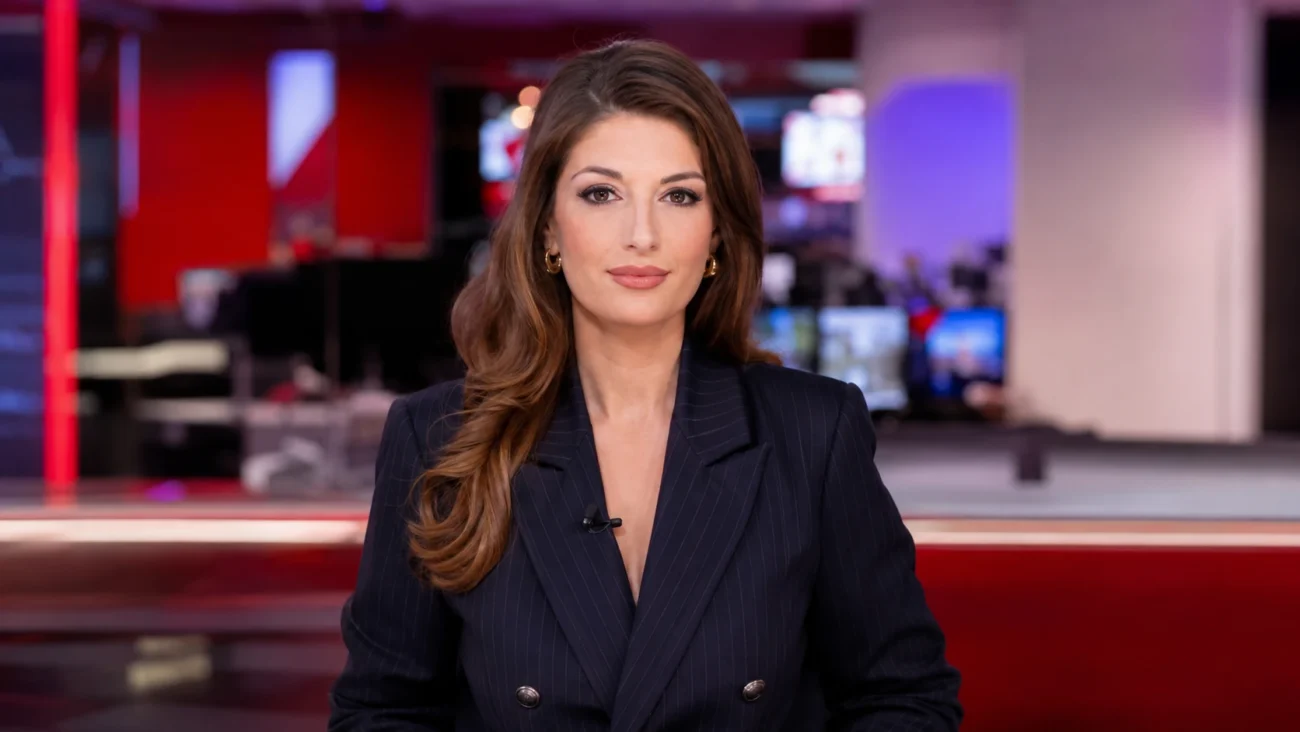
For millions of viewers, Helena Humphrey is a calm and familiar presence appearing from Washington, D.C. during moments when the news cycle feels especially unstable. She has reported on American elections, global health emergencies, civil unrest, humanitarian crises, and geopolitical conflict with the kind of steady delivery that television journalism depends on but rarely celebrates openly. Yet Humphrey’s story reaches far beyond the anchor desk. Before she became associated with BBC News, she worked across Europe, spent time in humanitarian operations with the United Nations and Red Cross, and built a career shaped as much by international movement as by journalism itself.
That combination has made her stand out in modern broadcast news. Humphrey belongs to a generation of correspondents who are expected to understand politics, media, technology, diplomacy, and public sentiment all at once. Her reporting career has unfolded across Paris, Geneva, Berlin, and Washington, and the result is a public figure who often appears polished on screen while carrying a background far more unusual than many viewers realize. Readers searching for Helena Humphrey are often looking for more than a television biography. They want to know who she is, where she came from, how she built her career, and what kind of life exists behind the studio lights.
Early Life and Family Background
Helena Humphrey is British, though much of her adult life and professional identity has been shaped by international work rather than a single hometown narrative. Publicly available biographical material about her early childhood remains limited, which is not uncommon for journalists who maintain clear boundaries between their professional and personal lives. Unlike entertainers or influencers who often share family stories openly, Humphrey has generally kept details about her parents, siblings, and upbringing out of the spotlight.
What is known is that she developed a strong interest in languages and international affairs early in life. Her educational background centered on language studies, and that interest became one of the defining forces of her career. Humphrey has spoken publicly about graduating from university around the time of the global financial crisis in 2009, when job opportunities across Europe were shrinking and many graduates struggled to establish stable careers. Instead of following a traditional route into British media, she moved abroad and started building experience in ways that would eventually shape her journalistic voice.
That period appears to have influenced her worldview in lasting ways. Humphrey’s career later reflected an ease with cross-border reporting and multilingual environments that many television journalists spend years trying to develop. Rather than presenting herself strictly as a domestic political reporter, she became associated with international stories and global audiences from relatively early in her broadcasting life.
Education and Early Ambitions
Humphrey studied languages at university, a decision that became central to her future career rather than simply an academic credential. She has publicly discussed her fluency in French and German, and those language skills helped open doors in European broadcasting and humanitarian communications. The truth is, language proficiency gave her more than employability. It also allowed her to navigate cultures directly, without relying entirely on translators or intermediaries.
After graduation, Humphrey moved to Paris and worked as a university teacher while also pursuing freelance journalism opportunities. That period reflected the reality many young journalists face before entering major media organizations. There was no instant breakthrough or overnight television debut. Instead, she pieced together experience through teaching, writing, and radio work while trying to establish herself professionally during an uncertain economic period.
Her early media work eventually led to positions in European radio broadcasting, including work with Radio France Internationale and World Radio Switzerland in Geneva. Those jobs mattered because they gave Humphrey practical newsroom experience in multilingual and international settings. Radio also sharpened her communication style. Reporters who begin in radio often develop a stronger sense of clarity and pacing because they learn to explain complex stories without relying on visuals.
Humanitarian Work and International Experience
One of the lesser-known aspects of Helena Humphrey’s biography is her work in the humanitarian sector before fully transitioning into high-profile television journalism. During her time in Geneva and later international postings, she worked with organizations connected to the United Nations and the Red Cross. That experience separated her career path from many conventional broadcasters who moved directly from journalism school into newsroom roles.
Humphrey has spoken about working in humanitarian communications across parts of Africa and Asia, including during the 2014 Ebola outbreak in Guinea. Those experiences exposed her to emergency response systems, aid operations, and the realities faced by communities dealing with public health disasters. The work also appears to have deepened her understanding of how global crises are reported and how media narratives can affect international response efforts.
What’s surprising is how directly that background later connected to her journalism career. During the COVID-19 pandemic, many broadcasters suddenly found themselves covering public health policy, international coordination, and humanitarian logistics on a daily basis. Humphrey entered those stories with firsthand experience of crisis communication and international aid systems. That gave her reporting a perspective shaped not only by journalism but also by field exposure.
Her humanitarian background also contributed to the kind of stories she chose to pursue. Humphrey’s reporting has often focused on international affairs, migration, protest movements, and political tensions that affect ordinary people rather than only institutions. That approach likely comes from years spent working close to humanitarian structures before she became a familiar television face.
Entering International Broadcasting
Humphrey’s move into television journalism happened gradually through European news organizations. One of her important professional chapters came at Deutsche Welle, Germany’s international broadcaster, where she worked both as an anchor and later as a Washington correspondent. Deutsche Welle gave her exposure to global political coverage and international audiences, particularly during a period when European and American politics were becoming increasingly interconnected.
During her years with Deutsche Welle, Humphrey covered protest movements, terrorism-related stories, and major political developments across Europe and the United States. The rise of populist politics, Brexit debates, and Donald Trump’s presidency all reshaped the demands placed on international broadcasters. Correspondents needed to explain not only what was happening but why it mattered globally.
Humphrey’s work in Washington during the Trump years became especially important to her career visibility. American politics had become a nonstop international story, and audiences outside the United States were closely following developments from the White House, Congress, and the Supreme Court. Her role required balancing fast-moving political news with clear explanation for viewers who were not immersed in American political culture.
At the same time, Humphrey also worked with Euronews as a lead anchor, strengthening her profile within European television journalism. Euronews placed a strong emphasis on multilingual international reporting, which aligned naturally with her background. The network’s focus on pan-European audiences also reinforced her reputation as a broadcaster comfortable operating beyond a single national perspective.
NBC News and Global Reporting
Humphrey later expanded her work into American network journalism through NBC News, where she served as a global correspondent. That role increased her exposure to major international stories and broadened her audience beyond European public broadcasters. She covered subjects including the COVID-19 pandemic, social unrest, and international political developments during a period of extraordinary global tension.
The pandemic years changed television journalism dramatically. Correspondents were expected to interpret scientific uncertainty, explain shifting public policy, and report on emotional social realities all at once. Humphrey’s earlier humanitarian experience likely helped her navigate those stories with greater confidence than reporters encountering global health crises for the first time.
At NBC and in related international work, she also reported during the period of widespread Black Lives Matter protests in the United States. Those demonstrations became one of the defining global news stories of the decade because they touched race, policing, politics, and media accountability simultaneously. Humphrey’s work during that period reflected a broadcaster capable of moving between breaking-news urgency and broader social context.
Her professional identity was becoming increasingly clear by then. She was not simply a studio anchor reading prepared scripts. Instead, she had developed into an international correspondent whose strength came from adaptability, multilingual communication, and experience across several kinds of global institutions.
BBC News and the Washington Role
Helena Humphrey’s association with BBC News brought her career to a much larger global audience. Based in Washington, D.C., she became part of the BBC’s North America coverage operation, reporting on American politics and international developments for viewers across the world. For many audiences outside the United States, BBC correspondents in Washington act as translators of American political culture as much as reporters.
That role requires a difficult balance. American political news moves at extraordinary speed, but international audiences often need context more than minute-by-minute commentary. Humphrey’s reporting style has generally leaned toward explanation and composure rather than theatrical confrontation, which suits the BBC’s broader international approach.
Her work for BBC News has included appearances as both anchor and correspondent, two roles that demand different skills. Anchors must manage live broadcasts, interviews, breaking developments, and production coordination simultaneously. Correspondents, meanwhile, gather reporting, verify information, conduct interviews, and provide analysis from the field. Humphrey has moved between both responsibilities throughout her career.
Washington remains one of the most influential postings in international journalism. Stories originating there affect markets, wars, migration policy, climate agreements, and diplomatic relationships around the world. Humphrey’s position inside that environment has made her a recognizable figure for viewers who rely on international news coverage during major global events.
Reporting Style and Public Reputation
Helena Humphrey’s reputation among viewers and industry observers rests largely on professionalism and international fluency rather than celebrity culture. She is not known for sensationalism or highly personal branding, which increasingly sets her apart in an era when many broadcasters cultivate social-media personas alongside their reporting careers.
Her reporting style tends to emphasize clarity and measured explanation. That approach works especially well in international broadcasting, where audiences may not share the same political assumptions or cultural references. Humphrey’s multilingual and multinational background appears to have strengthened her ability to communicate across those divides.
Colleagues and professional profiles often describe her as comfortable handling geopolitical issues, humanitarian stories, and crisis coverage. She has moderated public discussions and policy events connected to climate change, international affairs, and global health, adding another dimension to her professional image. Those appearances suggest that her expertise is respected beyond traditional newsroom settings.
But here’s the thing. Humphrey has also managed to maintain a degree of privacy unusual in modern media culture. While many television personalities build attention through lifestyle branding or constant online exposure, she has remained relatively focused on journalism itself. That choice has likely helped preserve her credibility in a field where audiences are increasingly skeptical of personality-driven news.
Personal Life and Relationships
Public information about Helena Humphrey’s personal life remains relatively limited. Unlike many public figures whose relationships become regular tabloid material, Humphrey has generally kept her private life separate from her professional identity. There is no widely confirmed public record detailing a spouse, marriage, or children.
Some online sources and entertainment-style biography sites make claims about her relationship status, but many of those listings rely on weak sourcing or recycled internet speculation. Without direct confirmation from Humphrey or highly reliable reporting, those details should be treated carefully rather than repeated as established fact.
That privacy appears intentional rather than accidental. Journalists, particularly those covering politics and international affairs, often face online scrutiny and harassment, making personal boundaries more important than ever. Humphrey’s public-facing career has focused overwhelmingly on her work rather than on turning her home life into content.
Even so, viewers remain curious because broadcast journalism creates a sense of familiarity. People regularly see correspondents during emotionally charged moments and naturally want to know more about them as individuals. Humphrey’s case reflects the tension between public recognition and private boundaries that many modern journalists navigate carefully.
Net Worth and Professional Earnings
Reliable public information about Helena Humphrey’s exact earnings or net worth is limited. Like many television journalists working within major international broadcasters, her salary details are not publicly disclosed in full. Estimates found on celebrity wealth websites vary widely and should be treated cautiously because they often rely on assumptions rather than verified financial reporting.
That said, Humphrey has worked across several high-level international media organizations, including BBC News, NBC News, Deutsche Welle, and Euronews. She has also participated in speaking engagements, moderation work, and international event hosting, which can provide additional professional income. Her career suggests financial stability and professional success, even if precise figures remain unconfirmed.
The broader point is that Humphrey’s value within the media industry comes from expertise rather than entertainment branding. International correspondents with multilingual skills, humanitarian experience, and on-air credibility remain highly valuable in global broadcasting. Her long-term career across respected organizations reflects that standing within the industry.
Public Image and Industry Standing
Helena Humphrey occupies an interesting space within television journalism because she is recognizable without being overexposed. She is respected among international-news audiences but has not pursued the kind of celebrity status that often surrounds cable-news personalities. That balance has likely strengthened her reputation as a serious journalist.
Her public image is also shaped by mobility and adaptability. Humphrey has lived and worked across several countries, covered stories from multiple continents, and moved between radio, television, humanitarian communications, and live event moderation. That range gives her credibility in conversations about global affairs and media itself.
She has also spoken openly about the challenges facing journalism, including shrinking public attention spans and the dangers of misinformation. Those concerns have become central to modern broadcasting, especially as social media increasingly competes with traditional news outlets for audience trust.
The truth is, Humphrey represents a version of journalism that many broadcasters are still trying to preserve: internationally informed, fact-focused, and less dependent on outrage-driven presentation. Whether audiences continue to reward that approach remains one of the defining questions facing global news organizations.
Where Helena Humphrey Is Now
Helena Humphrey continues to work in Washington, D.C. as part of BBC News’ international coverage operation. Her reporting remains focused on American politics, international affairs, and breaking global developments that affect worldwide audiences. The Washington posting keeps her close to major stories involving elections, foreign policy, economic tensions, and geopolitical conflict.
She also continues to appear in public discussions and moderated events tied to global policy and media issues. Her expertise in international affairs, humanitarian crises, and political reporting makes her a sought-after moderator and speaker for conferences and institutional forums.
At a time when journalism itself is under intense scrutiny, Humphrey’s career has remained relatively stable and respected. She has avoided many of the controversies that consume television personalities and instead built a reputation around consistency and professionalism. That may not generate tabloid headlines, but it has helped sustain a long-term international career.
What’s especially interesting is how her career path mirrors changes within journalism itself. Modern correspondents are expected to operate across platforms, understand global politics deeply, and communicate with audiences spanning multiple cultures. Humphrey’s background made her unusually prepared for that environment long before it became standard.
Frequently Asked Questions
Who is Helena Humphrey?
Helena Humphrey is a British journalist, anchor, and correspondent best known for her work with BBC News in Washington, D.C. She has also worked for NBC News, Euronews, and Deutsche Welle. Her background includes humanitarian communications work with organizations connected to the United Nations and the Red Cross.
Where is Helena Humphrey based?
Humphrey is based in Washington, D.C., where she works as part of BBC News’ North America coverage team. Her reporting focuses heavily on American politics and international developments connected to U.S. policy.
What is Helena Humphrey known for?
She is known for international broadcast journalism, particularly coverage of politics, humanitarian crises, public health emergencies, and geopolitical issues. Viewers often recognize her from BBC News reporting and live coverage from Washington.
Is Helena Humphrey married?
There is no widely confirmed public information about Helena Humphrey’s marital status or private relationships. She has generally kept her personal life out of the public spotlight, and reliable sources do not provide detailed information on that subject.
What languages does Helena Humphrey speak?
Humphrey is publicly described as fluent in English, French, and German. Her educational background focused on languages, and she has worked extensively across Europe and international media environments.
Did Helena Humphrey work outside journalism?
Yes. Before fully establishing herself in television journalism, Humphrey worked in humanitarian communications connected to the United Nations and the Red Cross. She has spoken publicly about working during the Ebola outbreak in Guinea.
What networks has Helena Humphrey worked for?
Over the course of her career, Humphrey has worked with BBC News, NBC News, Deutsche Welle, Euronews, Radio France Internationale, and World Radio Switzerland. Her professional experience spans radio, television, and international reporting.
Conclusion
Helena Humphrey’s career reflects a version of journalism built through movement, adaptation, and international experience rather than celebrity culture. She moved from language studies and early radio work into humanitarian operations and eventually into some of the world’s most recognizable news organizations. That path gave her reporting a perspective shaped by both institutions and real-world crisis environments.
Her work also shows how modern journalism has changed. International correspondents are no longer expected simply to deliver updates from abroad. They are expected to explain politics, culture, public health, conflict, and social unrest to audiences spread across continents. Humphrey’s background prepared her unusually well for that role.
Even after years in public-facing broadcasting, she has managed to preserve a degree of privacy that many television personalities lose quickly. That choice has helped keep attention centered on her reporting rather than on personal spectacle. For viewers, that restraint often reads as credibility.
Helena Humphrey remains part of a generation of journalists trying to hold onto careful reporting in a noisy media environment. Whether covering American elections or global crises, she has built a career around making difficult stories understandable without turning herself into the center of them. That may be the clearest explanation for why audiences continue searching for her name.
