
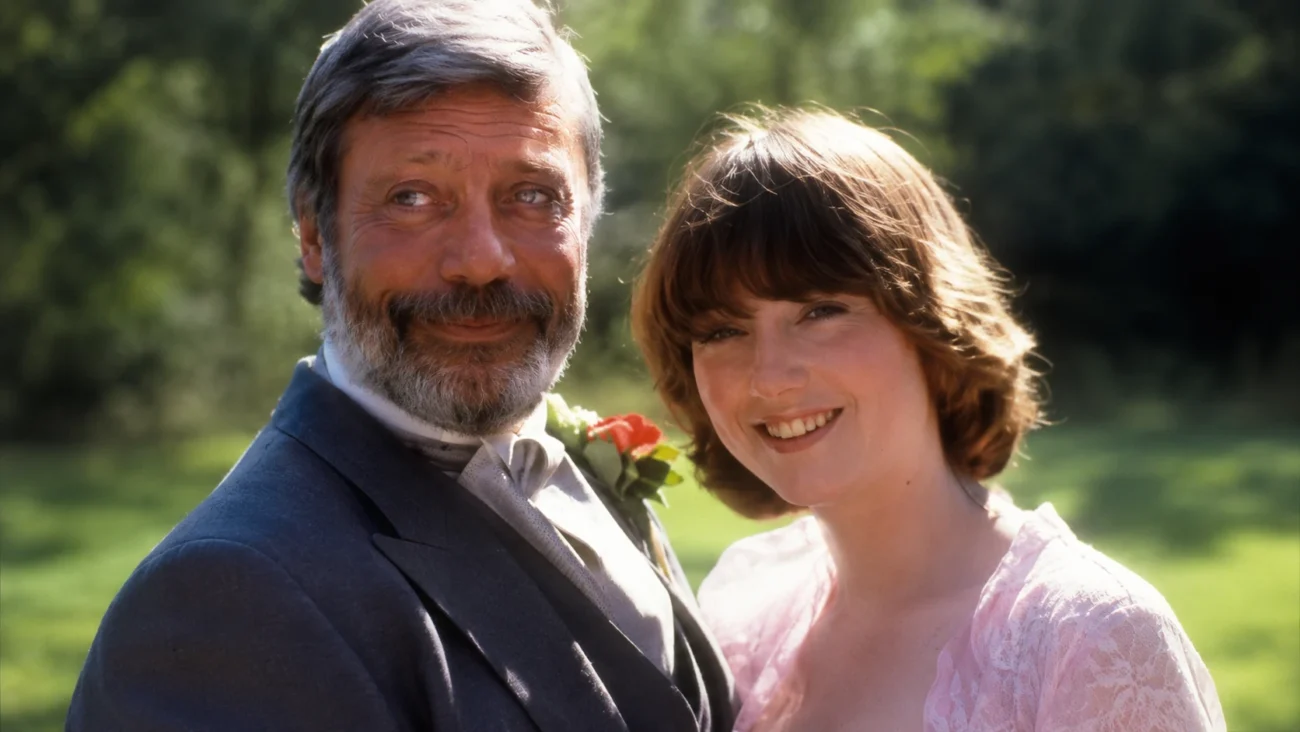
Josephine Burge entered public view through one of the most unpredictable stars in British cinema. While actor Oliver Reed spent decades building a reputation as a gifted performer and notorious hellraiser, Burge became known as the woman who shared his later life away from the loudest years of his fame. Their relationship drew attention because of the age gap, Reed’s larger-than-life image, and the mystery surrounding a woman who never appeared interested in celebrity for its own sake.
Even now, decades after Reed’s death in 1999, searches for Josephine Burge continue. Readers want to know who she was before she married Reed, what their relationship was really like, whether they had children together, and what happened to her after his death. The challenge is that Burge has remained remarkably private. Unlike many people linked to major stars, she did not build a media profile, give regular interviews, or turn personal history into public currency.
That silence has often encouraged speculation online. Yet the verified story is more interesting than rumor because it reveals the contrast between public mythology and private life. Josephine Burge became part of the story of one of Britain’s most unforgettable actors, but she never seemed eager to become a celebrity herself. Her biography is therefore less about fame than about proximity to it, and about what happens when someone chooses distance from the public spotlight even while standing close to it.
Early Life and Background
Very little verified information exists about Josephine Burge’s early life, and that absence has shaped much of the public curiosity around her. Unlike entertainers or media personalities whose childhoods and family histories become part of their public branding, Burge entered public awareness only through her relationship with Oliver Reed. Most credible reporting identifies her birth year as around 1964, based largely on her reported age at the time of her marriage.
She was 21 years old when she married Reed in September 1985. Reed himself was 46 at the time, already a major film star with decades of international fame behind him. Contemporary reporting stated that the relationship had begun years earlier, when Burge was still in her teens, which immediately attracted media attention and controversy. But here’s the thing. The public record rarely moved beyond those basic details because Burge did not offer interviews explaining her background, ambitions, or family life.
That has left many biographical gaps that responsible reporting should not fill with guesswork. There are no widely confirmed accounts of where she went to school, what profession she held before meeting Reed, or the details of her upbringing. Some online biographies repeat unsupported claims about her origins or career, but reliable mainstream reporting remains limited. The truth is, Josephine Burge became publicly known not because she pursued visibility, but because she entered the orbit of a man who could never escape it.
Meeting Oliver Reed
By the time Josephine Burge met Oliver Reed, he was already one of Britain’s most recognizable actors. Reed had built a career on intense screen performances and an off-screen persona that newspapers found irresistible. He was known as much for stories of drinking, fighting, and public chaos as for acclaimed performances in films such as Oliver!, Women in Love, The Devils, and The Three Musketeers.
Reports from the mid-1980s described Reed and Burge as having been together for several years before their marriage. According to Reuters coverage published after their wedding, the couple had begun their relationship when Burge was 16. The age difference generated immediate headlines because Reed was already in his forties and one of the most controversial celebrities in Britain.
Yet people close to Reed often described his relationship with Burge differently from his earlier turbulent romances. Friends and journalists who followed Reed’s later years frequently suggested that she brought a measure of calm to his life. That did not erase his reputation or completely change his behavior, but it did coincide with a period when Reed seemed increasingly interested in retreating from the constant performance of being “Oliver Reed the wild man.”
Marriage and Life Together
Josephine Burge and Oliver Reed married on September 7, 1985, at Epsom Register Office in Surrey, England. Contemporary press reports described the ceremony as brief and relatively modest compared to the scale of media attention surrounding Reed himself. He publicly defended the relationship at the time, insisting that the criticism they received had been unfair and that their years together had been happy.
The marriage marked Reed’s second official marriage. His first marriage, to Irish model Kate Byrne, had ended years earlier. Reed also had children from previous relationships, including his son Mark Reed and daughter Sarah. There is no strong public evidence that Josephine Burge and Oliver Reed had children together, despite occasional internet claims suggesting otherwise.
What’s surprising is how much of their married life unfolded away from the center of British celebrity culture. Reed increasingly spent time outside London, eventually making Ireland an important part of his later life. He purchased property in County Cork and became attached to the slower rhythm of life there. Friends later described Ireland as one of the few places where Reed appeared genuinely relaxed.
Burge was part of that transition. Rather than accompanying Reed through endless publicity campaigns or Hollywood social circles, she largely remained outside the machinery of fame. Their life together appears to have been more domestic and private than many people expected from a man with Reed’s reputation. That privacy also explains why photographs of the couple from public appearances remain relatively rare compared to Reed’s earlier years.
Oliver Reed’s Career During Their Marriage
While Josephine Burge herself stayed private, her marriage unfolded during an important stretch of Oliver Reed’s later career. By the mid-1980s, Reed’s acting reputation had become tangled with stories about his behavior. Television interviews often turned into spectacles, and tabloids treated him as a permanent source of outrageous headlines. Some producers viewed him as unreliable despite his undeniable talent.
Still, Reed continued working steadily. He appeared in films including Castaway, The Adventures of Baron Munchausen, and later Funny Bones. Critics often noted that Reed retained enormous screen presence even when the projects around him were uneven. Directors who understood how to use his intensity could still produce remarkable performances from him.
Not many people know this, but Reed’s reputation sometimes overshadowed the seriousness of his craft. He had worked with major directors including Ken Russell and Carol Reed, and many actors admired his raw emotional force on screen. During his marriage to Burge, there were signs that he wanted to move away from self-destruction and toward a quieter personal life, though the public image he had built over decades never fully disappeared.
By the 1990s, Reed’s career experienced renewed interest from younger filmmakers and audiences. His deep voice, physical presence, and unpredictable energy made him memorable even in supporting roles. That revival eventually led to the project that would define the end of his life and keep his name alive for a new generation: Ridley Scott’s Gladiator.
Life in Ireland
Ireland became deeply connected to the final chapter of Reed’s life and, by extension, to Josephine Burge’s public story. Reed settled for long periods in County Cork, where he found a level of peace that had often escaped him elsewhere. Local accounts from people who encountered him there described a man who still enjoyed company and drink but seemed more grounded than the tabloid caricature known throughout Britain.
Josephine Burge shared much of that Irish period with him. Their home life in Cork stood in sharp contrast to the chaos associated with Reed during the height of his fame. Instead of nightclub scandals and television controversies, the couple were more often associated with rural life, pubs, and local community interactions. Reed remained unmistakably famous, but the setting softened the intensity surrounding him.
There is also evidence that Burge herself preferred Ireland because it allowed greater privacy. Unlike London or Los Angeles, where Reed’s notoriety followed him constantly, Cork offered more distance from celebrity culture. Residents generally treated Reed as a colorful local figure rather than a permanent tabloid subject.
That environment may explain why Burge stayed there even after Reed’s death. Later reports connected her to west Cork, suggesting that Ireland remained central to her life long after she stopped appearing in public conversations about Reed.
Oliver Reed’s Death During Gladiator
Oliver Reed died suddenly on May 2, 1999, while filming Gladiator in Malta. He was 61 years old. According to widely reported accounts, Reed suffered a heart attack during a break in filming. His death shocked the film industry because he was in the middle of playing Antonius Proximo, one of the movie’s most memorable characters.
The production faced immediate uncertainty. Reed had not completed all of his scenes, and director Ridley Scott had to decide how to finish the film. Using a combination of digital effects, body doubles, and script adjustments, the filmmakers completed Reed’s performance rather than removing the character entirely. The result preserved one of the strongest late-career performances Reed ever gave.
For Josephine Burge, the death marked the end of a marriage that had lasted nearly 14 years. Public attention intensified again after years of relative quiet because Reed’s death became international entertainment news. Burge attended funeral events and memorial moments connected to Reed, but she did not become a regular public spokesperson for his legacy.
That choice mattered. Many celebrity widows become deeply involved in documentaries, memoirs, or estate management tied to a late spouse’s image. Burge instead seemed to move in the opposite direction. She maintained privacy and rarely spoke publicly about Reed after his death, which only increased public curiosity around her.
Life After Oliver Reed
One of the reasons Josephine Burge continues to attract search interest is that so little is publicly known about her life after 1999. There are no major televised interviews, memoirs, or high-profile media appearances that explain how she processed Reed’s death or rebuilt her life afterward.
The strongest publicly circulated account came years later through comments from Reed’s son Mark. In interviews discussing his father’s life in Ireland, Mark Reed stated that Josephine eventually remarried and continued living in west Cork. Beyond that, reliable details remain scarce.
That scarcity has fueled internet speculation, but careful biography writing requires restraint. There is no verified public record outlining her later career, finances, or family life after remarriage. Some websites attempt to construct detailed timelines from fragments, but many repeat unsourced claims without evidence.
The truth is, Burge appears to have succeeded in doing something increasingly rare around celebrity culture: stepping away from it. She remained connected to a famous name while resisting the pressure to turn personal history into ongoing public identity. That choice may be one reason she still fascinates readers. People are accustomed to celebrity families remaining visible forever, and Burge largely refused that model.
Public Image and Media Fascination
Josephine Burge’s public image has always been shaped by contrast. Oliver Reed was loud, controversial, emotional, and impossible to ignore. Burge was quiet, reserved, and mostly absent from publicity. Together, those differences created a kind of fascination that persists decades later.
Part of that fascination comes from the unanswered questions surrounding Reed’s private life. Reed often performed masculinity in exaggerated ways, especially during television appearances and interviews in the 1970s and 1980s. Yet accounts from friends during his later years sometimes described a softer domestic side that rarely appeared in public. Burge’s presence in his life became linked to that shift.
Still, there is danger in oversimplifying her role. Celebrity culture often casts wives as rescuers or stabilizing figures without considering their own identities. There is limited direct evidence showing how Burge herself viewed the relationship, and careful reporting should acknowledge that absence rather than invent emotional narratives.
What remains clear is that Burge occupied a unique place in Reed’s story. She was present during the final stage of his life, during his move toward Ireland, and during the years before his celebrated final role in Gladiator. Even without public interviews or memoirs, her place in that history remains important.
Josephine Burge and Net Worth Questions
Searches for Josephine Burge often include questions about money, inheritance, and net worth. Reliable public information on her personal finances is extremely limited. Because she maintained a private life, there are no well-documented public business ventures, entertainment contracts, or independent celebrity earnings tied to her name.
Questions about inheritance usually stem from Oliver Reed’s estate. Reed had earned substantial sums throughout his acting career, though reports over the years frequently suggested that his finances fluctuated due to lifestyle choices and inconsistent film work. Exact estate figures after his death were never fully established in reliable public reporting.
As a result, any modern “Josephine Burge net worth” figure found online should be treated carefully unless supported by credible financial records or established reporting. Many celebrity-net-worth websites rely heavily on estimation models rather than documented financial disclosures. The safest conclusion is that Burge likely benefited from Reed’s estate in some capacity as his widow, but her own financial situation has remained private.
Why Josephine Burge Still Draws Interest
Josephine Burge remains relevant partly because Oliver Reed’s reputation has survived across generations. Younger audiences continue discovering him through Gladiator, while older film fans remember his extraordinary presence in British cinema during the 1960s and 1970s. Anyone exploring Reed’s life eventually encounters Burge because she was central to his final years.
There is also a broader cultural reason people remain interested in her. Modern celebrity culture encourages endless visibility. Social media rewards constant self-disclosure, and the families of famous people are often expected to remain public forever. Burge chose the opposite path. She appeared briefly in public history and then stepped back almost entirely.
That decision gives her biography unusual weight. Readers searching for her are not simply looking for celebrity gossip. Many are responding to the mystery created when someone close to fame refuses to become consumed by it. In a media environment built around exposure, privacy itself becomes compelling.
Frequently Asked Questions
Who is Josephine Burge?
Josephine Burge is best known as the second wife and widow of English actor Oliver Reed. She married Reed in 1985 and remained with him until his death in 1999 during the filming of Gladiator. Much of her public recognition comes through that relationship because she maintained a largely private life outside celebrity culture.
How old was Josephine Burge when she married Oliver Reed?
Josephine Burge was 21 years old when she married Oliver Reed in September 1985. Reed was 46 at the time. Contemporary media coverage highlighted the large age difference, which became one of the most discussed aspects of their relationship.
Did Josephine Burge and Oliver Reed have children together?
There is no reliable public evidence that Josephine Burge and Oliver Reed had children together. Reed had two children, Mark and Sarah, from earlier relationships before his marriage to Burge.
What happened to Josephine Burge after Oliver Reed died?
After Reed’s death in 1999, Josephine Burge largely withdrew from public attention. Later comments from Reed’s son Mark suggested that she remarried and continued living in west Cork, Ireland. Beyond that, verified public information about her later life remains limited.
Where did Josephine Burge live with Oliver Reed?
During the later years of their marriage, Josephine Burge and Oliver Reed spent significant time in County Cork, Ireland. Reed became closely associated with the area and was eventually buried there after his death.
Why is Josephine Burge still famous today?
Josephine Burge remains a subject of public interest because of her connection to Oliver Reed, whose films and public image continue to attract attention decades after his death. Her privacy has also contributed to ongoing curiosity, since relatively little is publicly known about her personal life.
Conclusion
Josephine Burge occupies an unusual place in celebrity history. She was closely connected to one of Britain’s most unforgettable actors, yet she never seemed interested in becoming part of the entertainment industry herself. That contrast shaped both public fascination and the limits of what can responsibly be said about her.
Her life with Oliver Reed unfolded during a period when he was trying, in his own imperfect way, to move beyond the chaos that had long defined his reputation. Ireland became part of that story, and Burge stood beside him during the years leading up to his final and most widely remembered screen role in Gladiator.
But here’s the thing. The most truthful biography of Josephine Burge is one that accepts uncertainty where uncertainty exists. She did not leave behind a trail of interviews explaining herself, and she did not build a public persona designed for media consumption. What remains instead is the outline of a woman who chose privacy even while living beside fame.
That choice may be the reason people continue searching for her name. Josephine Burge represents a rare kind of figure in modern celebrity culture: someone connected to enormous public attention who still managed, for the most part, to keep her own life her own.
