
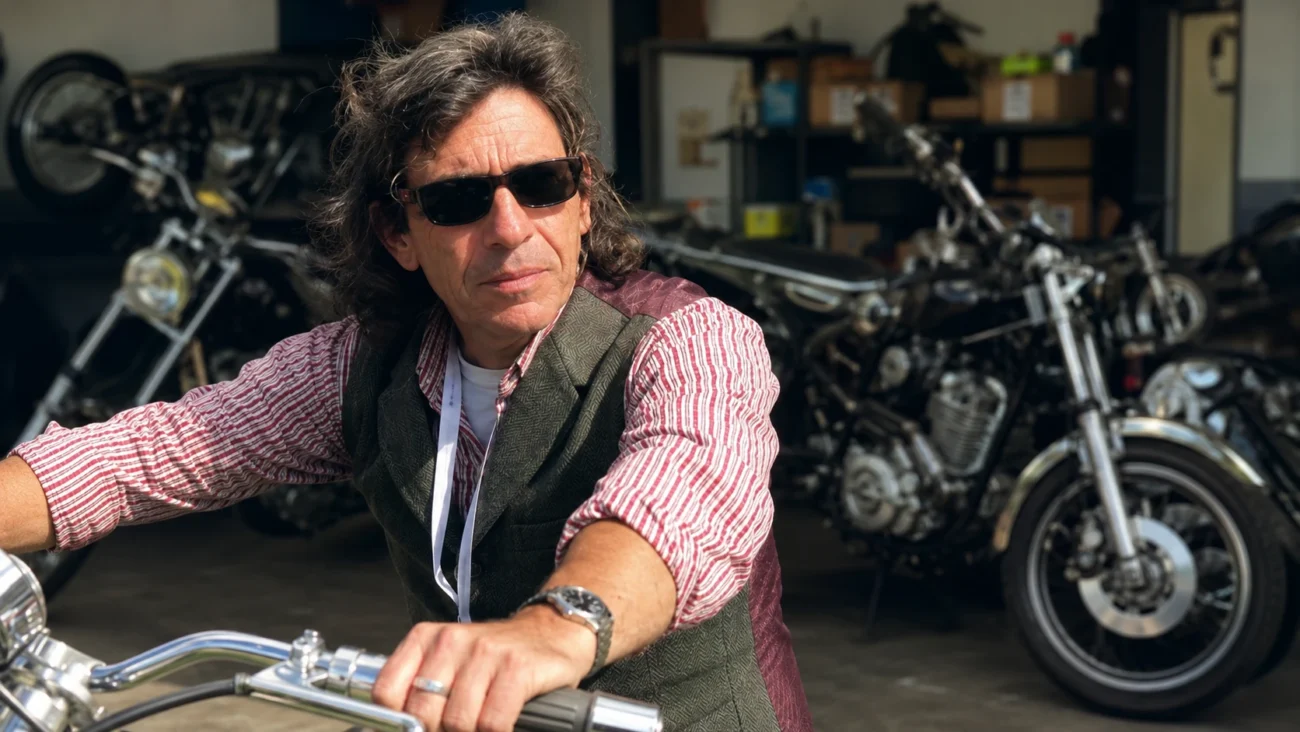
Guy Willison is best known to many viewers as “Skid,” the calm, sharp-eyed motorcycle builder who appears alongside Henry Cole on British restoration and motoring television. But the screen version of Willison only tells part of the story. Behind the nickname is a designer, fabricator and specialist builder whose work runs through despatch riding, custom motorcycles, Norton, Honda, 5Four Motorcycles and the enduring appeal of hand-built British bike culture.
His name attracts a particular kind of curiosity. Some people search for him after seeing him on The Motorbike Show, Shed and Buried or Find It, Fix It, Flog It. Others want to know about 5Four Motorcycles, his Honda builds, his age, his friendship with Henry Cole, or whether his private life is public. The most honest answer is that Willison is a public figure through his work, not through oversharing, and that makes his biography more about machines, skill and taste than celebrity noise.
Early Life and Background
Public information about Guy Willison’s early childhood, parents, schooling and hometown is limited. Official business records place his birth in October 1962, but the finer details of his family background have not been widely documented in reliable public sources. That privacy fits the way Willison has moved through public life: visible in the workshop, reserved outside it, and rarely presented as a personality chasing attention.
What can be said with confidence is that his later career was shaped by practical motorcycle culture rather than a purely formal design route. Willison came through the world of riding, fixing, tuning and understanding machines by direct contact. That kind of background matters because custom motorcycles are judged not just by how they look in photographs, but by whether they feel right under a rider.
His nickname, “Skid,” became familiar to television audiences, while the name 5Four links back to his earlier working life. The 5Four name has been associated with his despatch rider call sign, a small but revealing detail. It connects his polished limited-edition motorcycles to a much tougher world of urban riding, deadlines and machines that had to perform every day.
Early Work as a Rider, Mechanic and Builder
Before the television audience knew him, Willison built credibility in the kind of motorcycle circles where skill is tested quietly. Despatch riding, tuning and mechanical work are not glamorous routes into the industry, but they teach lessons a studio cannot. A rider who spends long hours depending on a machine develops a different relationship with weight, comfort, sound, control and failure.
This practical grounding helps explain Willison’s later design style. His bikes rarely look like exercises in decoration for decoration’s sake. They usually focus on proportion, stance, rider contact points, exhaust note, paint, seat shape and the way a motorcycle carries its history without becoming trapped by it.
That background also makes him different from a presenter who merely comments on restoration work. Willison’s authority comes from doing, not just talking. On screen, his appeal is often understated because he does not need to force expertise into every moment.
Friendship and Work With Henry Cole
Guy Willison’s public profile is closely tied to Henry Cole, the broadcaster, motorcycle enthusiast and producer behind several well-known motoring shows. Their friendship and working relationship helped bring Willison from specialist motorcycle circles into the homes of viewers who might not follow custom bike culture closely. Together, they created a television rhythm built on curiosity, repair, humour and the belief that old machines deserve a second chance.
The partnership works because they bring different energies. Cole is the enthusiastic frontman, collector and storyteller, while Willison brings the builder’s judgement. On shows such as The Motorbike Show and Shed and Buried, that balance gives the format its charm because excitement alone does not restore a motorcycle.
Willison’s role is often to look past the romance of a find and see the work ahead. A dusty bike in a barn may have emotional appeal, but it also has costs, missing parts, hidden faults and limits. That tension between possibility and practicality is where he is most useful on screen.
Career Breakthrough on Television
For many viewers, Willison became familiar through The Motorbike Show, where Henry Cole explored riding, restoration, engineering and motorcycle culture. Willison’s appearances helped give the show a grounded workshop feel. He was not there simply as a sidekick, but as someone who could help turn an idea into a working machine.
He also appeared in the wider Henry Cole television world, including Shed and Buried and Find It, Fix It, Flog It. These programmes depend on the pleasure of discovery, but they also need believable repair knowledge. Willison’s calm manner and hands-on confidence made him a natural fit for shows where objects are not just admired, but repaired, modified and sold.
Television expanded his recognition, but it did not create his credibility from nothing. Viewers responded because he seemed like the real thing: a builder who had spent enough years around motorcycles to know what could be saved, what should be changed, and what was not worth pretending about. That authenticity is one reason his name still attracts searches long after viewers first noticed him.
Gladstone Motorcycles and the Custom Bike Years
One of Willison’s important early public milestones was his work with Henry Cole on Gladstone Motorcycles. Gladstone was not a mass-market project; it sat in the world of limited, hand-built British motorcycles. The best-known Gladstone machines were created for riders who wanted character, craftsmanship and a link to old British motorcycling without simply buying a museum piece.
The Gladstone No.1 became part of that story as a small-run machine built with a clear sense of identity. Projects like that require more than taste. They demand an understanding of frame lines, engine character, finishing quality, rider posture and the emotional pull of a motorcycle that feels personal.
Willison’s work on Gladstone helped establish him as more than a restorer. He was becoming known as someone who could shape a complete motorcycle idea. That distinction is important because restoration asks a builder to return something to life, while design asks him to decide what it should become.
Norton Commando 961 Street
The Norton Commando 961 Street became another key step in Willison’s reputation. The Commando name carries serious weight in British motorcycling, and any reinterpretation invites sharp scrutiny from riders who care deeply about Norton history. A project attached to that name cannot rely on nostalgia alone.
Willison’s work on the Commando 961 Street showed the same instinct that later defined 5Four. The aim was not to erase the identity of the base machine, but to sharpen it. A successful limited-edition motorcycle should feel like a natural extension of the original, not like a costume placed over it.
That ability to work with heritage without becoming trapped by it is central to Willison’s appeal. British motorcycle culture can be sentimental, but Willison’s better-known projects are more disciplined than that. They respect old forms while still caring about usability, finish and the way a modern rider experiences the bike.
Founding 5Four Motorcycles
5Four Motorcycles became the clearest expression of Guy Willison’s personal design identity. The brand is associated with limited-edition, individually numbered motorcycles, often built in small runs rather than wide production. Its stated spirit is exclusivity, but not in a flashy way; the draw is the sense that each bike has passed through a builder’s eye and hands.
The company name carries the feel of Willison’s earlier working life. Because 5Four is linked to his despatch rider call sign, it gives the brand a more personal tone than a polished corporate label would. It suggests a builder shaped by the road first, then by design.
The brand’s strongest projects have often involved taking a serious manufacturer’s motorcycle and giving it a sharper, more personal character. That is a difficult balance to strike. Change too little and the bike feels like a parts-bin edition; change too much and the original machine disappears.
Honda CB1100 RS 5Four
The Honda CB1100 RS 5Four gave Willison and 5Four a wider platform. The project marked Honda heritage while bringing Willison’s eye for restraint, finish and riding detail to a factory-backed limited edition. It drew on endurance-racing influence and classic Honda memory without turning the motorcycle into a replica.
The build showed how Willison thinks. Changes to seat, bodywork, exhaust, controls and paint were aimed at giving the bike a tighter emotional identity. The CB1100 RS already had retro appeal, but the 5Four version made it feel more purposeful and collectible.
This project also helped establish 5Four as a serious small-batch name rather than a side project from television. Honda’s involvement gave the bike credibility beyond custom circles. For riders who had watched Willison on TV, it also gave them a tangible example of the work behind the reputation.
Honda CB1000R 5Four and Modern Performance
After the CB1100 RS, the Honda CB1000R 5Four moved the idea into a more modern performance setting. The CB1000R was not a purely nostalgic base, which meant the 5Four treatment had to work with a sharper, more contemporary motorcycle. That shift showed that Willison’s design language was not limited to retro styling.
The CB1000R 5Four focused on stance, finishing, exhaust character and visual balance. The aim was to make the bike feel special while preserving the appeal of the original Honda. That is harder than it sounds because modern naked bikes already have strong factory identities.
Willison’s strength lies in knowing where to intervene. A different builder might chase drama through excess, but his best work tends to cut, refine and focus. The result is usually a motorcycle that looks more considered rather than merely more expensive.
Honda CB1000 Hornet SP 5Four
The Honda CB1000 Hornet SP 5Four continued the relationship between 5Four and Honda. It placed Willison’s design approach on a modern, high-performance naked bike with serious mechanical credentials. The project showed that his brand identity could keep moving forward rather than living only through classic references.
The Hornet SP base brought power, modern suspension, strong braking and a current Honda platform. A 5Four version had to add desirability without pretending to reinvent the motorcycle from scratch. That kind of project depends on judgement, because the best special editions know when to respect the donor bike.
For Willison, the Hornet SP also reinforced his continued relevance. He was not simply a familiar face from older television episodes or past Norton projects. His name remained attached to new limited-edition motorcycles, which is the clearest evidence that his work still carries value in the industry.
Design Style and Workshop Reputation
Guy Willison’s design style is best described as disciplined, tactile and rider-focused. His motorcycles often show careful attention to the areas a rider notices first: bars, seat, tank line, exhaust, rear profile and finish. The changes may look simple to a casual viewer, but good simplicity is often the result of many hard decisions.
He seems most interested in making a motorcycle feel more resolved. A raised number plate, cleaner rear end, reshaped seat or different exhaust can change the whole character of a bike. These are not random upgrades if they work together toward a clearer identity.
His reputation also benefits from the fact that he does not present himself as a loud showman. In motorcycle culture, especially among older riders and collectors, understatement can carry more authority than performance. Willison’s public image fits that world: dry, capable, practical and quietly exacting.
Marriage, Family and Private Life
Guy Willison has kept his private life largely out of the public domain. There is no widely confirmed, reliable public information about a wife, partner, children or detailed family circumstances. That privacy should not be treated as suspicious or turned into speculation.
Many people connected to specialist television become familiar faces without becoming conventional celebrities. Willison fits that category. Viewers may feel they know him because his screen manner is relaxed and recognisable, but his public identity remains built around motorcycles rather than family exposure.
This makes careful reporting important. Some online profiles repeat private claims without clear sourcing, but a serious biography should not convert search interest into invented certainty. The honest position is that his career is public, while much of his personal life is not.
Net Worth and Income Sources
There is no verified public net worth for Guy Willison. Any precise figure attached to his name should be treated as an estimate unless it comes from a credible financial disclosure or direct, reliable reporting. The available evidence supports a general view of his income sources, but not a confirmed personal fortune.
Willison’s professional earnings likely come from several areas: television appearances, motorcycle design, limited-edition builds, brand partnerships and specialist workshop projects. Those areas can be valuable, but they also involve costs, partners, production limits and business structures that outsiders cannot fully see. A small-run motorcycle brand is not the same as a high-volume manufacturer.
The more meaningful measure is professional standing. Willison has been trusted with projects tied to Norton and Honda, has appeared for years on British motoring television, and has built a recognisable name in a demanding specialist field. That tells readers more than a guessed wealth number.
Public Image and Appeal
Guy Willison’s public appeal comes from a mix of technical skill and lack of polish in the best sense. He does not seem packaged as a media product. He comes across as a workshop person who happened to become visible because television needed people who could actually do the work.
That quality matters in restoration television. Audiences can sense when someone is only reading expertise from a script. Willison’s comfort around motorcycles, tools and mechanical problems gives his appearances the kind of lived-in authority viewers trust.
His appeal also reaches beyond TV viewers. For custom motorcycle followers, his name is linked to real machines, not just commentary. That gives him a stronger claim to relevance than many screen personalities whose work ends when the episode does.
Where Guy Willison Is Now
Guy Willison remains associated with 5Four Motorcycles and specialist motorcycle design. Recent public-facing 5Four and Honda material has continued to connect him with limited-edition builds, especially Honda-based projects. That ongoing work keeps him active in the same space that made his reputation: carefully finished, small-run motorcycles for riders who want something more individual than a showroom standard bike.
His television work also remains part of his public identity. Episodes, repeats and streaming availability keep introducing new viewers to his partnership with Henry Cole. That means his audience is not limited to people who watched the shows during their original runs.
The most accurate current picture is of a builder whose profile rests on continuity rather than reinvention. Willison has not become a celebrity detached from his craft. His name still means motorcycles, restoration, limited editions and the kind of practical judgement that only comes from years around machines.
Frequently Asked Questions
Who is Guy Willison?
Guy Willison is a British motorcycle builder, designer and television personality known by the nickname “Skid.” He is best known for his work with Henry Cole on motorcycle and restoration programmes, as well as for founding 5Four Motorcycles. His career links television, hand-built bikes, limited editions and British motorcycle culture.
Why is Guy Willison called Skid?
“Skid” is the nickname by which many viewers know him from television. The name 5Four, meanwhile, is associated with his old despatch rider call sign. Both names connect him to a practical riding background rather than a manufactured media identity.
How old is Guy Willison?
Public company records list Guy Willison’s birth month and year as October 1962. That places him in his early sixties as of 2026. A full verified birth date is not widely used in reliable public profiles, so the month and year are the safest details to state.
Is Guy Willison married?
Guy Willison has not made his marriage or family life a major part of his public profile. There is no firmly verified public information that should be treated as a confirmed account of his wife, partner or children. His public story is mainly about motorcycles, television and 5Four Motorcycles.
What is 5Four Motorcycles?
5Four Motorcycles is the specialist motorcycle brand associated with Guy Willison. It is known for limited-edition, individually numbered machines and bespoke work. The brand’s best-known projects include Honda-based builds such as the CB1100 RS 5Four, CB1000R 5Four and CB1000 Hornet SP 5Four.
What TV shows has Guy Willison appeared on?
Guy Willison has appeared in the Henry Cole motoring and restoration universe, including The Motorbike Show, Shed and Buried and Find It, Fix It, Flog It. His role is usually tied to motorcycle knowledge, restoration work and technical judgement. These appearances helped make him familiar to a wider audience beyond custom bike circles.
What is Guy Willison’s net worth?
Guy Willison’s net worth has not been verified by reliable public sources. Online figures should be treated as estimates rather than fact. His known income sources are likely connected to television, motorcycle builds, design work, limited-edition projects and brand partnerships.
Conclusion
Guy Willison’s biography is really the story of a working motorcycle man who became visible without losing the feel of the workshop. He did not build his reputation through celebrity confession or constant publicity. He built it through bikes, television appearances and a recognisable design instinct.
His career stands at the meeting point of old British motorcycle culture and modern limited-edition craft. Gladstone, Norton, Honda and 5Four each show a different part of that path. Taken together, they explain why his name still matters to viewers and riders.
The private details remain mostly private, and that restraint is part of the picture. What the public can see clearly is enough: a builder with road-earned taste, a long creative partnership with Henry Cole, and a place in the small but passionate world of British motorcycle design. Guy Willison still matters because his work reminds people that a motorcycle is not only a machine, but also a feeling shaped by hands, judgement and time.
