
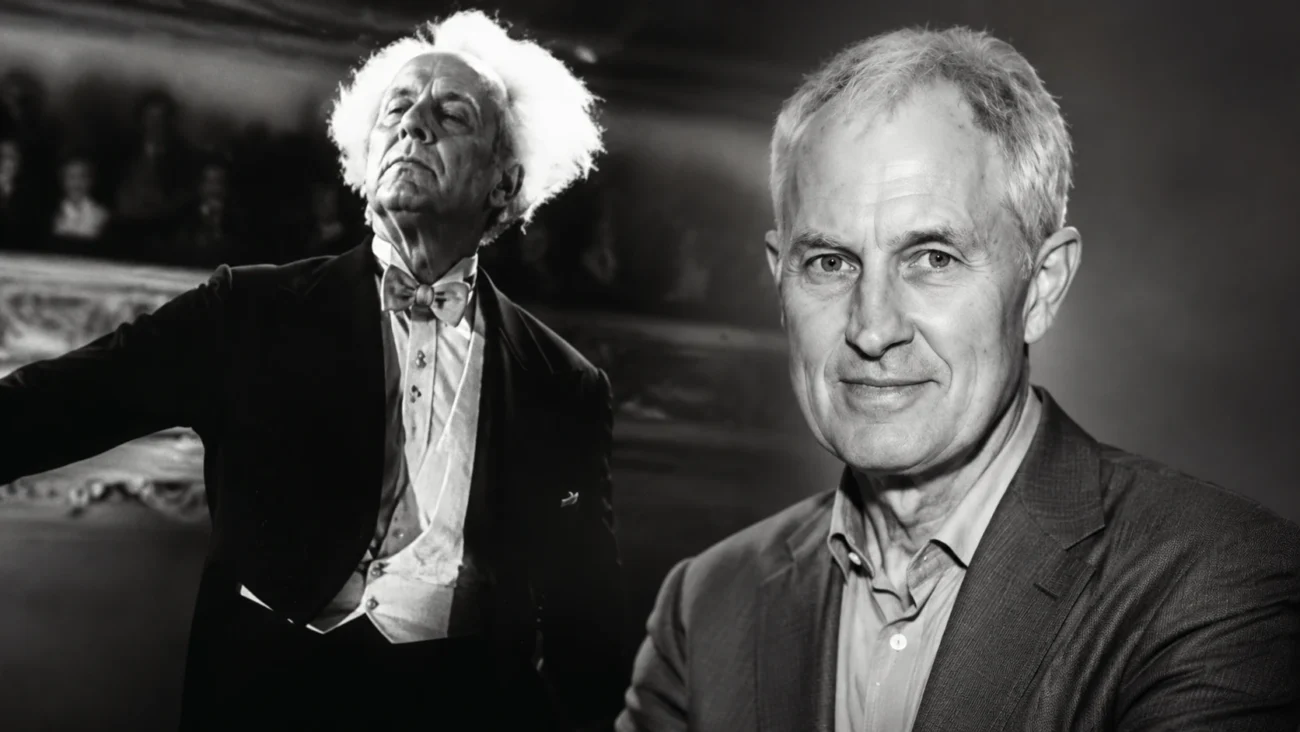
Leopold Stanislaus Stokowski was a conductor whose name still echoes in concert halls, on film soundtracks, and in conversations about how classical music can be both serious art and public spectacle. In a career that stretched from the Gilded Age to the late 20th century, he did more than lead orchestras: he shaped how orchestras sounded, how audiences experienced music, and how generations understood the role of a conductor. At a time when classical music risked being seen as remote, he made it feel alive, dramatic, and at times even cinematic.
Born in London in 1882, Stokowski’s life spanned nearly a century of intense cultural change. He lived through two world wars, witnessed the birth of recorded sound, and became one of the first classical musicians to embrace media beyond the concert hall. From his long tenure leading the Philadelphia Orchestra to his unforgettable presence in Walt Disney’s Fantasia, Stokowski’s career was marked by ambition, controversy, and a restless drive to broaden the impact of orchestral music. His story is one of innovation and contradictions: a man equally at home with traditional symphonies and new technology, admired by peers and critiqued by purists, yet always compelling. +1
Early Life and Family
Leopold Anthony Stokowski was born on April 18, 1882, in the Marylebone district of London to a Polish father, Kopernik Joseph Boleslaw Stokowski, and an Irish mother, Annie‑Marion Moore Stokowski. His upbringing was modest; his father worked as a cabinet‑maker, and young Leopold absorbed music through church choirs and piano studies rather than in an affluent conservatory environment.
Musical talent showed early. By the age of eight he was already mastering piano and violin, and in his early teens he became one of the youngest students admitted to the Royal College of Music in London, where he focused on organ and composition. This early education laid the groundwork for a lifetime of musical curiosity and technical command.
Family life contained both stability and subtle tensions. Though his heritage was Polish and Irish, public perceptions of his background were muddied by the exotic accent he cultivated later in life and the way he sometimes described his origins. The truth, supported by official records, is simpler: his identity was rooted in English, Polish, and Irish influences that shaped his early worldview.
From Church Organist to Rising Conductor
After graduating from Queen’s College, Oxford, with a Bachelor of Music degree in 1903, Stokowski began his career as a church organist and choirmaster in London. It was not until 1905 that he crossed the Atlantic to take up a post as organist and choirmaster at St. Bartholomew’s Church in New York City. There he impressed parishioners with his performance and musical selections, though his willingness to push boundaries occasionally unsettled more conservative clergy.
Stokowski’s transition from church musician to orchestra conductor was nothing short of bold. He studied conducting in Paris, Berlin, and Munich, seeking exposure to different styles and influences. His first major break came in 1909 when he made his official conducting debut with the Colonne Orchestra in Paris, accompanying his future wife, pianist Olga Samaroff. That performance caught the attention of the Cincinnati Symphony Orchestra, which offered him a conducting position later that year.
Within just a few years, Stokowski had left Cincinnati and set his sights on a larger stage: the Philadelphia Orchestra.
Philadelphia Orchestra and the Birth of the “Stokowski Sound”
In 1912 Stokowski became music director of the Philadelphia Orchestra, an appointment that would define both his career and American orchestral history. At the time, the orchestra was not yet among the nation’s elite. What followed was a transformation. Under Stokowski’s leadership, the ensemble evolved into one of the finest in the world, known for its lush, rich sonority that came to be called the “Stokowski Sound” or “Philadelphia Sound.”
This sound was no accident. Stokowski experimented tirelessly with seating arrangements, string bowing techniques, and orchestral balance. He was among the first to group first and second violins together on the conductor’s left and to encourage free bowing — a practice in which string players used individualized bowing movements that contributed to a fuller, more blended sound. These innovations helped define an orchestral identity that audiences and critics alike found striking and distinct.
Stokowski also relished theatrical elements that blurred the lines between concert and performance art. He once conducted in near‑darkness with only his head and hands illuminated, and by the late 1920s he famously abandoned the traditional baton, preferring to lead with free hand gestures. Such choices reinforced his reputation as an artist whose imagination extended beyond the score.
Championing New Music and Young Audiences
While Stokowski’s orchestral sound captured attention, he also broadened the repertoire. Throughout his decades with the Philadelphia Orchestra — a span that formally lasted until 1936 but extended through frequent guest appearances — he introduced audiences to music that was unfamiliar to many American listeners. His programs included works by contemporary European composers such as Gustav Mahler, Edgard Varèse, Arnold Schoenberg, and Igor Stravinsky, among others. He also gave multiple premieres of pieces by modern American composers, reinforcing his commitment to expanding what audiences considered mainstream orchestral music.
Stokowski didn’t see the orchestra simply as a custodian of established repertoire; he saw it as a living institution that should reflect the breadth of musical thought. This sometimes brought him into conflict with more conservative critics and audiences, yet it also set him apart as an advocate for musical evolution.
Hollywood, Fantasia, and Mass Audiences
One of the most enduring associations of Stokowski’s name comes from an unexpected place: animation. In 1940 Walt Disney invited him to collaborate on Fantasia, an ambitious project that paired classical music with animated sequences. Stokowski conducted the Philadelphia Orchestra for the film’s soundtrack and even appeared, silhouetted, shaking hands with Mickey Mouse — a moment that helped bridge the worlds of high art and popular culture. +1
The process of recording Fantasia was itself an experiment. Disney and Stokowski used early multi‑channel audio technology known as Fantasound, intended to give the music a depth and clarity beyond what traditional recordings could achieve. While the film’s initial box office performance was modest, its cultural impact was immense; for many, it became their first encounter with classical orchestral music in an accessible, animated format.
Stokowski’s willingness to engage with new media — and to do so without compromising his musical integrity — demonstrated his belief that classical music could thrive beyond the traditional concert hall.
Later Career and Continued Innovation
After leaving his formal directorship with the Philadelphia Orchestra in 1936, Stokowski’s career remained dynamic. He conducted the NBC Symphony Orchestra alongside Arturo Toscanini in the early 1940s, shared leadership of the New York Philharmonic Orchestra in the late 1940s, and served as music director of the Houston Symphony in the 1950s. In 1962 he founded the American Symphony Orchestra in New York City, a group that allowed him to continue exploring repertoire and performance practices with a new generation of musicians.
Throughout these years, Stokowski remained passionate about recording music and exploring technological innovations in sound. Even in his nineties he was signing recording contracts and completing projects that his younger contemporaries might have considered retirement work. His final public performance occurred in 1975, and he continued recording up until shortly before his death in 1977 at age 95.
Personal Life: Marriages and Family
Stokowski’s personal life was as high‑profile as his professional one. He was married three times, each union reflecting a different chapter of his journey. In 1911 he wed American concert pianist Olga Samaroff, whom he met during his early conducting days; the couple had one daughter before divorcing in 1923.
His second marriage, to Evangeline Love Brewster Johnson — an artist and aviatrix from the Johnson & Johnson family — lasted from 1926 to 1937 and produced two daughters. During this period, Stokowski’s social presence grew even as his artistic ambitions continued to expand.
Perhaps the most publicized of his relationships was his third marriage, to heiress and actress Gloria Vanderbilt in 1945, when he was 63 and she was just 21. The union drew considerable media attention. They had two sons — Leopold Stanislaus Stokowski and Christopher Stokowski — before divorcing in 1955.
Across these relationships and family connections, there is a consistent theme: Stokowski’s personal life often intersected with broader cultural narratives, making him a figure of public interest beyond the musical world.
Legacy and Influence
Stokowski’s legacy is multifaceted. On one hand, he is remembered as a transformative conductor whose innovations influenced how orchestras sound and how music is presented. His recordings remain in circulation, still admired for their color, precision, and expressive range.
On the other hand, his willingness to adapt scores, manipulate orchestral balance, and experiment with presentation drew criticism from purists who preferred strict adherence to composers’ written intentions. Yet even critics acknowledge that his boldness expanded the possibilities of orchestral expression and engagement.
Beyond music professionals, Stokowski’s impact on public perception of classical music is undeniable. Through film, recordings, and charismatic presence, he helped bring symphonic music into the lives of audiences who might otherwise never have encountered it.
Frequently Asked Questions
Who was Leopold Stanislaus Stokowski?
Leopold Stanislaus Stokowski was a British‑born conductor known for his long association with the Philadelphia Orchestra, his vibrant conducting style, and his appearances in film, especially Disney’s Fantasia.
What is the “Stokowski Sound”?
The “Stokowski Sound” refers to the lush, rich sonority that Stokowski developed with the Philadelphia Orchestra through innovative seating arrangements, string techniques, and orchestral balance.
Did Stokowski compose music?
While primarily known as a conductor, Stokowski also made orchestral transcriptions of works by composers such as Bach and was involved in adaptations for performances and recordings.
What was Stokowski’s role in Fantasia?
Stokowski conducted the Philadelphia Orchestra for the soundtrack of Fantasia (1940) and was recorded using early multi‑channel sound technology. His silhouette appears in the film, famously shaking hands with Mickey Mouse.
How long did Stokowski’s conducting career last?
Stokowski’s official conducting debut was in 1909, and he continued public performances into the mid‑1970s, making his professional span nearly seventy years.
Conclusion
Leopold Stanislaus Stokowski was more than a conductor; he was a cultural force who shaped the way orchestral music was heard and experienced in the 20th century. His work with major American orchestras, his embrace of new music, and his fearless engagement with media like film and recording broadened the reach of a genre often seen as exclusive or inaccessible. Though his methods and interpretations sparked debate, they also sparked curiosity and conversation.
More than four decades after his death, Stokowski’s influence continues to resonate. His recordings and filmed performances offer windows into a time when orchestral music was reinventing itself for new audiences, and his name remains a testament to what happens when artistry meets ambition.
