
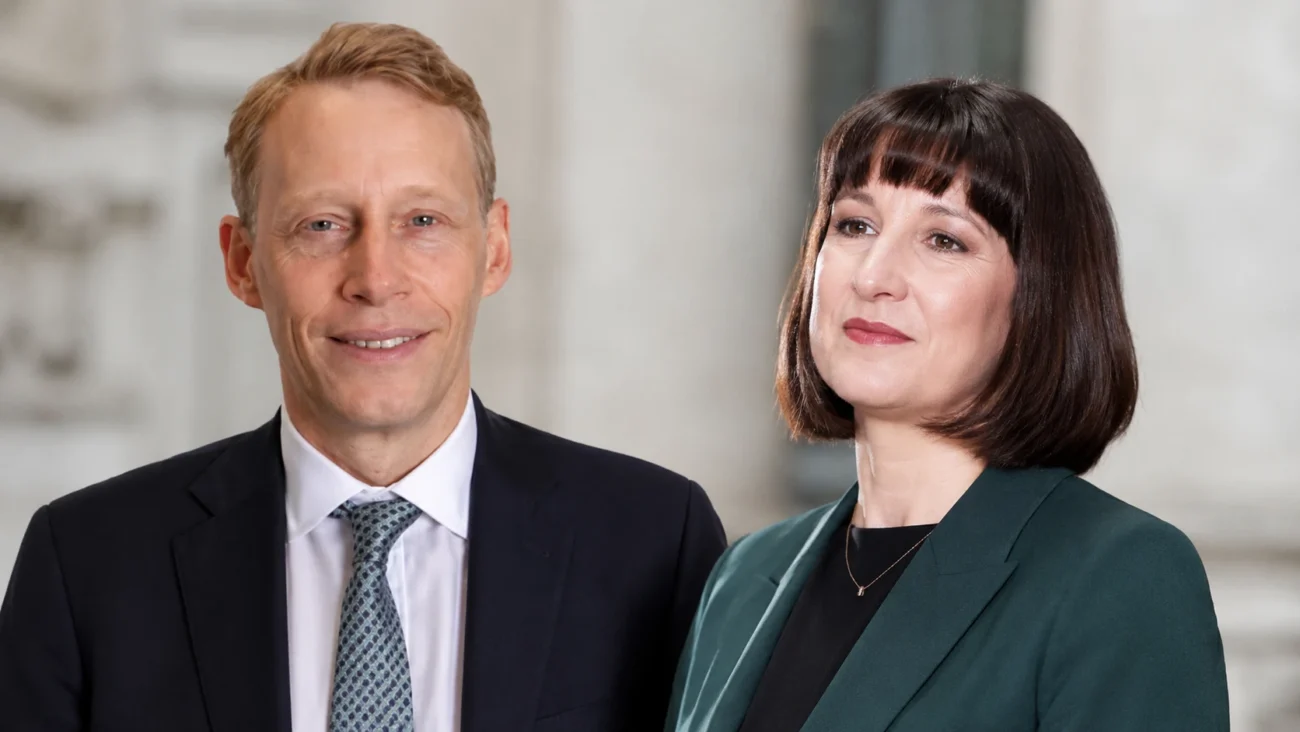
Nicholas Joicey has spent much of his professional life inside the machinery of the British state, shaping policy, managing budgets, and advising government departments far from television cameras or campaign stages. Yet in recent years, his name has begun appearing far more often in public conversation, partly because of his own senior civil service career and partly because he is married to Rachel Reeves, the Chancellor of the Exchequer and one of the most influential politicians in modern Britain.
That combination has turned Joicey into an unusual public figure. He is not a celebrity in the traditional sense, nor is he an elected politician. Instead, he belongs to the class of senior officials who quietly help run government behind the scenes. His career stretches across HM Treasury, the Cabinet Office, the Department for Work and Pensions, and Defra, giving him a reputation inside Whitehall as an experienced policy and finance specialist with a deep understanding of how government actually works.
What makes Nicholas Joicey interesting is not scandal or publicity. The real story is how a historian by training became one of Britain’s most trusted civil servants, how his professional path intersected with modern Labour politics, and how he has managed to remain largely private while operating close to the center of power.
Early Life and Family Background
Public information about Nicholas Joicey’s early life remains relatively limited, which is not unusual for senior British civil servants. Unlike politicians, civil servants are not expected to build public personas or campaign biographies, so many personal details simply never become part of the public record.
What is publicly known is that Nicholas Beverley Joicey was born in May 1970 in the United Kingdom. He later attended the University of Bristol before continuing his studies at the University of Cambridge, where he completed a PhD in modern history. His academic background suggests a strong interest in institutions, politics, and cultural change long before he entered government service.
Not many people know this, but Joicey’s early academic work focused partly on publishing history and British cultural life. One of his known scholarly contributions examined Penguin Books and postwar British society, reflecting an intellectual curiosity that differed from the more technical economics route many Treasury officials follow.
That humanities background may help explain the style of career he later built. Joicey has often occupied positions requiring both analytical discipline and political sensitivity. Those roles demand more than spreadsheets and fiscal targets. They require an understanding of institutions, public behavior, and the pressures ministers face.
Education and Academic Interests
Joicey’s university years appear to have shaped both his intellectual outlook and his professional trajectory. Bristol and Cambridge have long produced senior British civil servants, political advisers, historians, and economists, placing him inside a powerful educational network that feeds directly into public life.
At Cambridge, he pursued modern history at doctoral level, an experience that likely sharpened his understanding of government systems and political development. While detailed information about his dissertation is not widely circulated, records from academic publishing databases connect him with work examining twentieth-century British culture and publishing.
The truth is, history graduates have often flourished inside Whitehall. British government departments traditionally value officials who can process complex information, interpret institutional behavior, and communicate clearly under pressure. Joicey’s later career suggests he translated those academic skills into practical administrative leadership.
His connection to higher education did not end after university. In later years, he became involved with the University of Bristol as an independent trustee and chair of its Finance and Investment Committee. That role placed him back inside the academic world, this time from the perspective of governance and financial oversight rather than scholarship.
Entering the Civil Service
Nicholas Joicey entered the UK Civil Service during a period when Whitehall was changing rapidly. Governments in the late 1990s and early 2000s were pushing departments to modernize financial systems, improve policy coordination, and operate with tighter accountability standards.
Early in his career, Joicey joined HM Treasury, one of the most influential departments in British government. Treasury officials occupy a unique position because they shape public spending decisions across every other department. Working there exposes officials to economic policy, taxation debates, spending negotiations, and international finance.
For ambitious civil servants, Treasury experience can become a launching pad into wider leadership roles. Joicey steadily built a reputation as someone comfortable handling both technical finance work and broader strategic policy issues. Over time, he moved into increasingly senior positions connected to international economics and government coordination.
One important stage of his Treasury career involved work connected to international financial institutions. Public records show he spent time at the UK delegation to the International Monetary Fund in Washington, D.C. That role exposed him to international economic diplomacy at a time when global financial coordination was becoming more politically sensitive.
Rising Through Whitehall
Joicey’s rise through the Civil Service did not happen overnight. British government departments tend to reward experience accumulated over many years, particularly in senior operational roles where mistakes can carry enormous consequences.
By the 2010s, he had become a significant figure within Whitehall. He served in senior Treasury roles dealing with European and international finance, areas that became especially important during the eurozone crisis and wider debates about Britain’s economic position in Europe.
Here’s where it gets interesting. Joicey’s career path was never limited to economics alone. He moved into Defra, the Department for Environment, Food and Rural Affairs, where he held leadership responsibilities tied to strategy, food policy, farming, and international affairs.
Defra is one of the more politically complicated departments in government because it touches agriculture, food supply chains, environmental regulation, fisheries, climate policy, and rural economies. Officials there must balance scientific evidence, business pressures, environmental concerns, and political realities. Joicey’s ability to work across those areas strengthened his reputation as a versatile administrator rather than a narrowly technical official.
During this period, he also became Head of the Policy Profession within Defra, overseeing standards and professional development related to policymaking inside the department.
The DWP Years
In 2018, Joicey moved to the Department for Work and Pensions as Director General for Finance. That appointment placed him inside one of the largest and most operationally demanding government departments in the UK.
The DWP handles pensions, welfare payments, employment support, and disability benefits. Its financial systems process billions of pounds annually and directly affect millions of citizens. Running finance operations at that scale requires precision, political awareness, and the ability to function under constant scrutiny.
His years at DWP coincided with enormous social and economic disruption. The department faced pressure from welfare reform debates, the rollout of Universal Credit, and later the financial and administrative shock caused by the COVID-19 pandemic.
Senior officials during that period were responsible not only for maintaining benefit systems but also for adapting them rapidly during crisis conditions. The pandemic forced government departments to process emergency support measures at unprecedented speed.
While ministers receive public attention during crises, much of the implementation work falls to civil servants. Joicey’s finance leadership role meant he operated close to major spending and operational decisions during one of the most difficult periods in modern British public administration.
Cabinet Office and Central Government Influence
After his DWP work, Joicey moved to the Cabinet Office, serving as Director General of the Economic and Domestic Secretariat. That title may sound bureaucratic, but the role itself carried substantial influence.
The Cabinet Office sits near the center of government coordination. Officials there help organize decision-making between departments and support the functioning of Cabinet government. The Economic and Domestic Secretariat, in particular, works on domestic policy coordination and economic issues crossing departmental boundaries.
This type of role requires diplomacy as much as technical expertise. Senior Cabinet Office officials must manage competing priorities between ministers, departments, and advisers while keeping government business moving.
Joicey’s appointment reflected how trusted he had become inside Whitehall. Officials do not usually reach Cabinet Office leadership positions without demonstrating both administrative competence and political reliability across multiple governments.
That reliability matters because British civil servants are expected to remain politically impartial. They serve governments of different parties while maintaining continuity inside the state. Joicey’s career spans Conservative-led governments while his wife became one of Labour’s most senior politicians, a situation that naturally drew public attention.
Marriage to Rachel Reeves
Nicholas Joicey’s marriage to Rachel Reeves brought a new level of visibility to his name. Reeves, a Labour MP who later became Chancellor of the Exchequer, rose steadily through British politics during the 2010s and early 2020s.
The couple reportedly met through overlapping professional and political circles tied to economics and public policy. Reeves herself worked at the Bank of England before entering Parliament, giving the pair shared experience in economic institutions and government culture.
They married in 2012 and have children together, though both Joicey and Reeves have generally kept their family life private. Public interviews and profiles occasionally reference their home life, but neither has cultivated a celebrity-style public image.
That said, the relationship inevitably attracted scrutiny as Reeves advanced politically. Questions emerged about how Britain manages situations where senior civil servants are married to prominent politicians.
The British system addresses such concerns through declarations of interest, transparency procedures, and civil service rules governing impartiality. Public records show that Reeves was listed in official declarations connected to Joicey’s government positions, reflecting the normal disclosure process rather than evidence of wrongdoing.
The attention intensified after Labour’s election victory in 2024 elevated Reeves to Chancellor. As head of the Treasury, she became responsible for Britain’s economic policy, public spending strategy, and financial management. Her husband’s long Treasury and Whitehall background naturally drew curiosity from journalists and political observers.
Defra Leadership and Second Permanent Secretary Role
In July 2023, Nicholas Joicey returned to Defra as Second Permanent Secretary and Group Chief Operating Officer. The appointment confirmed his standing as one of the senior administrative figures inside British government.
Permanent secretaries are the highest-ranking civil servants in departments. A second permanent secretary role is still extremely senior and often exists in departments handling large or complex portfolios.
At Defra, Joicey oversaw operational management and strategic coordination during a period when environmental and agricultural policy carried growing political weight. Britain was still adjusting to post-Brexit regulatory systems affecting farming, trade, fisheries, and environmental standards.
The department also faced mounting public pressure connected to water quality, climate policy, food security, and agricultural subsidies. Those issues required coordination between scientists, regulators, ministers, industry groups, and international partners.
What’s surprising is how little public attention senior civil servants receive compared with ministers, despite the scale of responsibility attached to their jobs. Joicey’s work affected policy delivery across areas that directly touched millions of people’s lives, yet he remained largely unknown outside government and political journalism circles.
Oxford and the Blavatnik School of Government
In 2025, Joicey began a secondment to the Blavatnik School of Government at the University of Oxford, serving as Interim Chief Operating Officer.
The move represented a shift from direct government administration into the academic and policy world. The Blavatnik School focuses on public policy, governance, leadership, and international government studies, making it a natural fit for someone with decades of senior Whitehall experience.
Secondments between government and universities are not unusual in Britain. They allow institutions to exchange expertise while giving senior officials time outside the daily pressures of departmental management.
At Oxford, Joicey’s responsibilities included overseeing operational functions and supporting the school’s broader strategic direction. His experience managing large public organizations likely made him valuable in a university environment balancing academic priorities with financial and administrative realities.
Public parliamentary records later confirmed that he remained formally connected to Defra during the secondment, with Oxford reimbursing the department for associated salary costs.
Public Image and Professional Reputation
Nicholas Joicey’s public image differs sharply from that of most high-profile political spouses. He has rarely given interviews, does not appear heavily active in public-facing media, and has avoided turning his proximity to political power into personal branding.
Inside policy and civil service circles, however, he is generally viewed as a highly experienced operator with strong institutional knowledge. His career reflects a Whitehall tradition that values calm management, administrative discipline, and adaptability across departments.
He has also received recognition within the British honors system. Joicey holds the title CB, meaning Companion of the Order of the Bath, an honor often awarded to senior civil servants and military officers for distinguished service.
The truth is, modern British government depends heavily on figures like Joicey. Ministers may set political direction, but long-term governance also relies on officials who understand institutional systems and can maintain continuity during political change.
Estimated Net Worth and Earnings
Reliable personal wealth information about Nicholas Joicey is limited. Like many senior civil servants, his publicly known income mainly comes from government salary disclosures and related appointments rather than commercial ventures.
Government annual reports have placed his salary within senior civil service pay bands generally ranging from around £150,000 to £170,000 depending on the role and reporting year. Those figures place him among the upper tier of UK public sector officials.
There are no widely verified reports suggesting large private business holdings or major corporate wealth. Any net worth estimates circulating online should therefore be treated cautiously unless tied to credible financial reporting.
That said, a long senior civil service career combined with university governance positions and senior administrative appointments would likely provide financial stability and pension benefits consistent with upper-level public service careers in Britain.
Personal Life Away From Politics
Despite operating near political power, Joicey has largely protected his private life from public exposure. He and Rachel Reeves have generally avoided turning family life into political theater, a contrast with some modern political couples who embrace public visibility.
Friends and colleagues who have spoken publicly about Reeves often describe the couple as policy-focused, intellectually serious, and grounded in public service culture rather than celebrity culture.
Joicey’s interests outside government appear to include education, public institutions, and cultural organizations. His past involvement with the University of Bristol and organizations linked to science and cultural governance suggest a broader interest in institutional leadership beyond politics alone.
Not many people know this, but his earlier academic interests in publishing history hint at someone whose intellectual life extends well beyond economics and administration.
Where Nicholas Joicey Is Now
As of 2026, Nicholas Joicey remains connected to the Blavatnik School of Government at Oxford while retaining links to the UK Civil Service through his secondment arrangement.
His name continues to appear in discussions about public administration, government leadership, and Whitehall organization, especially as Rachel Reeves occupies one of the most powerful positions in British politics.
Yet Joicey himself still operates in the careful, restrained style typical of senior British civil servants. He has not pursued elected office, media celebrity, or overt political advocacy.
That restraint may actually explain his longevity. British governments change constantly, but institutions depend on people capable of working steadily through those transitions. Joicey’s career reflects that culture of continuity.
Frequently Asked Questions
Who is Nicholas Joicey?
Nicholas Joicey is a senior British civil servant who has worked in several major UK government departments, including HM Treasury, Defra, the Department for Work and Pensions, and the Cabinet Office. He is also known publicly as the husband of Chancellor Rachel Reeves.
What is Nicholas Joicey’s current job?
Joicey has been associated with the Blavatnik School of Government at the University of Oxford as Interim Chief Operating Officer during a secondment from the Civil Service. Public records also continue to connect him with Defra.
Is Nicholas Joicey married to Rachel Reeves?
Yes. Nicholas Joicey and Rachel Reeves married in 2012. Reeves later became Chancellor of the Exchequer after Labour’s 2024 election victory.
What is Nicholas Joicey’s educational background?
He studied at the University of Bristol and later completed a PhD in modern history at the University of Cambridge. His academic work included research connected to British publishing and cultural history.
Has Nicholas Joicey worked at HM Treasury?
Yes. Treasury service formed a major part of his career. He worked on international finance and European economic matters and also spent time connected to the UK delegation to the International Monetary Fund in Washington.
What honors has Nicholas Joicey received?
Nicholas Joicey holds the honor CB, meaning Companion of the Order of the Bath. The distinction is commonly awarded to senior civil servants and military leaders for distinguished public service.
What is Nicholas Joicey’s estimated net worth?
There is no fully verified public estimate of his personal net worth. Most publicly documented earnings come from senior UK civil service salary disclosures connected to his government positions.
Conclusion
Nicholas Joicey represents a type of public figure Britain often overlooks until politics pulls them into wider attention. He is not a headline-seeking minister or a media personality. Instead, he belongs to the quieter world of senior civil servants who keep departments functioning while governments rise and fall around them.
His career tells a broader story about modern Whitehall. Historians can become finance officials, policy advisers can move into operational leadership, and civil servants can shape national decisions without becoming household names. Joicey’s path through Treasury, Defra, DWP, and the Cabinet Office reflects that system in action.
His marriage to Rachel Reeves brought additional public curiosity, but it did not define the substance of his professional life. Long before Reeves became Chancellor, Joicey had already established himself as an experienced figure inside British government with expertise in policy coordination, finance, and administration.
Today, he remains part of the institutional backbone of British public life. Readers searching for Nicholas Joicey often arrive because of politics, but they usually leave with a better understanding of something larger: how modern government actually works, and who helps hold it together behind the scenes.
