
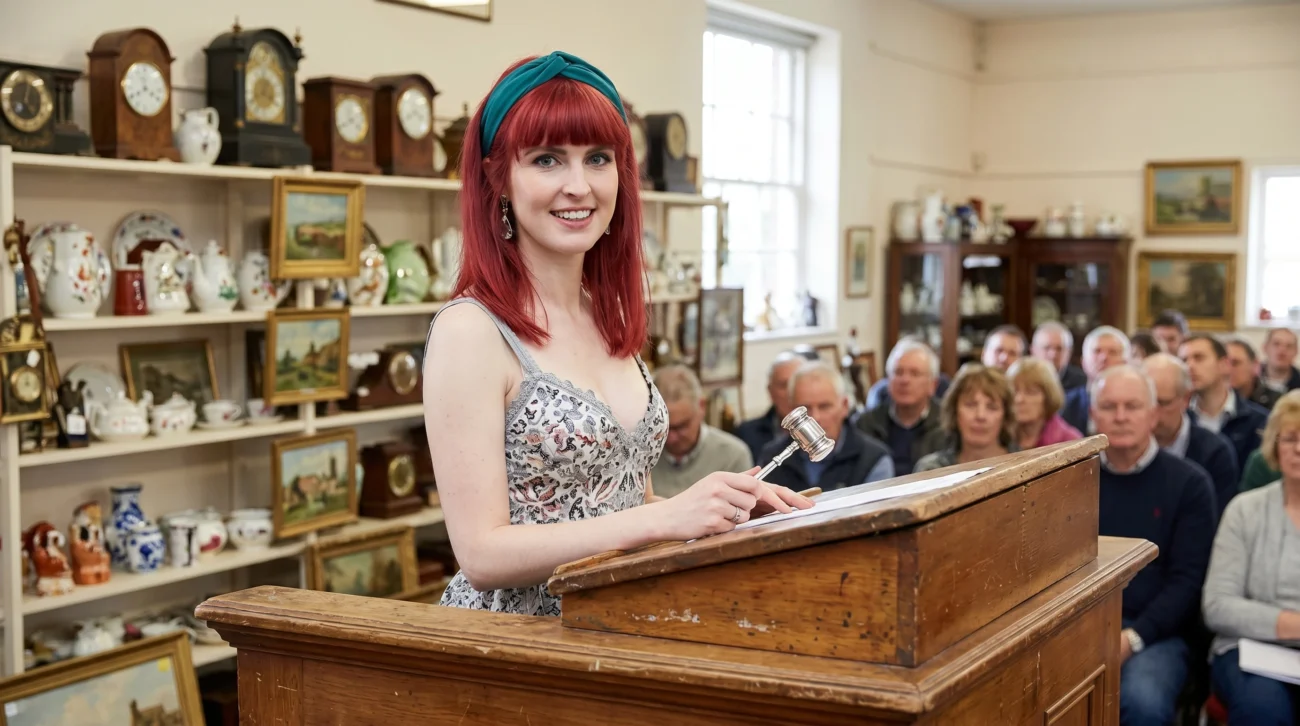
Izzie Balmer became familiar to British daytime television viewers not through scandal, reinvention, or a carefully managed celebrity campaign, but through something quieter and harder to fake: knowing what she is talking about. On programmes such as Antiques Road Trip, Bargain Hunt, Flog It! and The Travelling Auctioneers, she brings the calm assurance of someone who has spent years handling real objects, facing real sellers, and watching real bidders decide what something is worth. Her appeal sits in that balance between warmth and authority. She can explain jewellery, silver, and antiques without making viewers feel shut out of the conversation.
For many viewers, the search for “izzie balmer” begins with recognition. They have seen her in an auction room, on the road with another expert, or helping a family understand whether something tucked away at home might carry more than sentimental value. But curiosity quickly moves beyond the screen. People want to know where she came from, how she entered the antiques trade, whether she is married, what her qualifications are, and what she is doing now.
The most reliable story of Izzie Balmer is a professional one. She is an auctioneer, valuer, jewellery and silver specialist, and television expert whose public career grew from practical auction-house work rather than instant media fame. Her route into antiques was not a straight line, which is part of what makes her biography feel modern. It is the story of someone who found a field almost by accident, learned it from the inside, and turned specialist knowledge into a public-facing career.
Early Life and Family Background
Izzie Balmer is from Bristol, a city that continues to be part of her professional identity. Public profiles connected to her valuation work describe her as Bristol-based, and her later career has kept her close to the West Country auction world. Unlike some television personalities, she has not made her private family life a central part of her public image. That privacy has left room for plenty of online guessing, but responsible biography has to separate what is known from what is merely repeated.
There is limited verified public information about Balmer’s parents, siblings, or childhood household. That does not mean there is a mystery to solve; it more likely reflects a deliberate boundary between her professional life and her private one. Many experts who move into television from specialist trades keep that separation, especially when their public role is tied to knowledge rather than celebrity confession. In Balmer’s case, the available record gives a clearer picture of her education, training, and career than of her early family story.
What can be said with confidence is that she did not appear to grow up on a heavily publicized path toward television. Her later interviews and profiles suggest a more ordinary early adulthood, marked by uncertainty about career direction and a gradual discovery of the antiques trade. That background matters because it makes her rise feel earned rather than packaged. She entered a field where credibility usually comes from years of looking, learning, and making judgments that can be tested in the saleroom.
Education and First Ambitions
Balmer studied geography at university, a detail that often surprises viewers who assume she must have trained from the start in art history, jewellery, or antiques. Geography may not sound like an obvious route into auctioneering, but it does suggest a mind trained to notice context, place, materials, and human patterns. After university, she did not immediately settle into a clear career. She has spoken about returning home and considering different graduate paths before finding her way into vintage and antique objects.
Her early interest grew through hands-on exposure rather than a grand career plan. A part-time role in a vintage shop helped spark her curiosity about old things, their stories, and their changing value. From there, she gained experience at an auction house, beginning with practical tasks that were far from glamorous. Packing, posting, organizing, and handling objects gave her the kind of close contact with material culture that no textbook can fully replace.
That early stage is one of the most useful parts of Balmer’s career story. It shows how specialist expertise often begins in the back room, not in front of a camera. The person who later values jewellery on television first learns how objects arrive, how they are described, how buyers respond, and how mistakes can affect sellers. For Balmer, the route from uncertain graduate to auction-house professional was built through attention and repetition.
Learning the Auction Trade
Auction houses teach people quickly because they combine scholarship, commerce, performance, and pressure. A valuer cannot rely only on enthusiasm; they must judge condition, likely demand, authenticity, category, and timing. Balmer’s early work exposed her to that rhythm. She moved from support roles into cataloguing, valuation days, and eventually the more public act of auctioneering.
The saleroom is an unusual workplace because it turns knowledge into live consequence. If an estimate is too high, an item may fail to sell; if it is too low, a client may lose confidence or a bidder may walk away with an unexpected bargain. Experts learn by watching what the market actually does, not only by reading what an object should be worth. That discipline shaped Balmer’s professional manner, which is practical, measured, and alert to uncertainty.
Auctioneering itself also asks for a kind of controlled performance. The auctioneer must hold a room, track bids, keep pace, and maintain trust. Balmer has compared the atmosphere of a busy saleroom to performance, which makes sense for someone who later adapted naturally to television. The screen did not require her to invent a public presence from nothing; it gave a wider audience to skills already being used in front of sellers and buyers.
Jewellery, Silver, and Specialist Training
Balmer is best known professionally as a jewellery and silver specialist. That distinction matters because these categories can be technically demanding and emotionally sensitive. Jewellery often arrives with family stories attached, and silver can carry clues in hallmarks, makers’ marks, weight, style, and condition. A good specialist must respect the owner’s attachment while still giving a realistic view of market value.
Her public credentials include FGA and DGA designations connected to gemmology and diamond training through the Gemmological Association of Great Britain. Those letters are not decorative in a field where small distinctions can alter value. Gemstone identification, diamond grading, metal testing, mount assessment, and period recognition all require disciplined study. The combination of auction-house experience and formal gemmological training gives Balmer a stronger base than a presenter who simply knows how to talk well on camera.
This specialist background is one reason she works effectively on television. Viewers do not need every technical detail, but they can sense when an expert is simplifying from knowledge rather than improvising from a script. Balmer tends to explain objects in plain English while preserving the reason a piece matters. That is a useful gift in antiques broadcasting, where the expert’s job is to make the object legible without draining it of charm.
Breakthrough on Television
Balmer’s move into television came through the antiques world rather than around it. Her first screen opportunities were connected to auction-house filming, including the kind of production visits that bring programmes such as Bargain Hunt into working salerooms. The story often told about her early television break is that she stepped in unexpectedly during filming and discovered she could handle the pressure. That kind of beginning fits her public image: practical, alert, and willing to rise to the occasion.
Television producers need experts who can do more than identify objects. They need people who can explain, react, listen, and keep the story moving while real sales unfold. Balmer’s auction-room background gave her a strong advantage because she already understood the pace and stakes of the environment. She was not learning antiques for television; she was learning television as an extension of antiques.
Her early appearances helped establish her as part of a younger generation of antiques experts who could bring energy to familiar formats. British antiques television has a long history of turning dealers, auctioneers, and valuers into household names. Balmer entered that tradition with a style that felt accessible but not lightweight. She did not need a loud persona because the work itself gave her authority.
Antiques Road Trip and Growing Recognition
Antiques Road Trip became one of the key programmes through which many viewers came to know Izzie Balmer. The format sends antiques experts around the country to buy items and test their judgment at auction. It is part travelogue, part competition, and part public lesson in how unpredictable the antiques market can be. For an expert, it requires confidence, quick thinking, and the humility to accept that the hammer price may prove you wrong.
Balmer’s strengths fit that format well. Her jewellery and silver knowledge can give her an edge with smaller, easily overlooked items, while her wider auction experience helps her judge whether a purchase has sale-room appeal. The show also allows viewers to see the human side of expertise. A good buy can produce delight, while a failed gamble reminds everyone that even trained specialists cannot control the market.
Her appearances on Antiques Road Trip also helped broaden her public profile beyond viewers who follow individual auction houses. She became recognizable not only as a specialist but as a television personality with a steady, engaging presence. The programme rewards experts who can make viewers feel included in the decision-making process. Balmer’s style works because she lets the audience see both the appeal of an item and the risk attached to buying it.
Bargain Hunt, Flog It!, and the BBC Antiques World
Balmer’s work on Bargain Hunt and Flog It! placed her within some of the BBC’s most familiar antiques formats. These shows have long introduced general audiences to valuation, buying strategy, and auction results. They are built on simple questions that never stop being interesting: What is this object? What might it be worth? Will anyone else want it enough to bid? Balmer’s role is to help answer those questions without making the process feel closed to non-specialists.
On Bargain Hunt, experts help teams buy items before those pieces are sold at auction. The format looks cheerful and light, but it quietly tests a specialist’s ability to guide amateurs under budget and time pressure. Balmer’s temperament suits that role because she can be encouraging without pretending every object is a winner. Viewers respond to experts who can share excitement while still respecting the discipline of the trade.
Flog It! and similar programmes depend even more directly on valuation and public trust. People bring possessions with personal history, hoping for insight and sometimes a sale. An expert has to balance optimism with honesty, especially when an object’s emotional value is higher than its commercial value. Balmer’s public reputation has grown from handling that balance with clarity and tact.
The Travelling Auctioneers
The Travelling Auctioneers gave Balmer a different kind of television platform. The programme brings auctioneers and restorers to people’s homes, helping them identify items that might be repaired, refreshed, and sold. It is less about experts competing against one another and more about helping families understand what they own. That makes the emotional tone of the show different from the profit-driven drama of a road trip format.
Balmer’s role on the programme fits her strengths as both a valuer and communicator. She has to look at objects in domestic settings, explain their potential, and consider whether work on a piece might improve its appeal. The presence of restorers adds another layer because not every repair increases value, and not every neglected item deserves major intervention. The best decisions come from understanding the object, the owner, and the likely buyer.
The programme also reflects the way antiques television has changed. Audiences still enjoy the thrill of auction results, but they also want stories about family, memory, sustainability, and reuse. Balmer’s work in that setting feels less like performance and more like guidance. She helps translate the auction world for people who may never have dealt with a saleroom before.
Current Professional Work
Away from television, Balmer continues to work as a valuer and specialist. Public professional profiles have connected her with Clevedon Salerooms, where she has been listed as a jewellery consultant and associate valuation specialist. That role places her back in the world that made her credible in the first place. Television may make her recognizable, but valuation work keeps her tied to the day-to-day realities of the trade.
Her professional activities appear to include jewellery and silver valuations, probate-related work, consultancy, auction-house support, and advice around estates or downsizing. These areas require more than a good eye. They involve sensitivity to clients who may be dealing with bereavement, inheritance, family decisions, or major life changes. In those settings, the expert has to be accurate, clear, and careful about what a valuation can and cannot promise.
Balmer has also been associated with public valuation days and private jewellery appraisal services. These appearances show how her television profile and trade expertise reinforce each other. A recognizable name can bring people through the door, but the appointment still has to stand on professional judgment. That is where her specialist training and auction background matter most.
Public Image and Personality
Izzie Balmer’s public image is calm, capable, and approachable. She does not appear to court attention through controversy or highly personal disclosure. Instead, her screen identity rests on expertise, good humour, and the pleasure of finding interest in objects that others might pass by. That kind of profile can be especially durable because it is tied to competence rather than constant reinvention.
Part of her appeal comes from the way she makes specialist knowledge feel conversational. Jewellery and silver can become intimidating subjects very quickly, but Balmer tends to keep explanations clear. She gives enough detail to show why a piece deserves attention, then brings the viewer back to the practical question of value. That rhythm helps her connect with both casual viewers and antiques enthusiasts.
Her public presence also stands out because she represents a younger and more contemporary face of the auction world. Antiques television has sometimes been associated with older experts and traditional collecting habits. Balmer helps show that the trade is not frozen in the past, even though it deals in old things. She makes the field feel alive, accessible, and open to people who may not have grown up around salerooms.
Relationships, Marriage, and Private Life
Balmer’s private life is one of the most searched parts of her biography, but it is also the area where public information is thinnest. There is no reliable public confirmation of a husband, spouse, children, or current partner. Many websites repeat claims about her romantic life, but they often do so without firm sourcing. A careful profile should not turn that repetition into fact.
This privacy is not unusual for television experts who are known for their work rather than celebrity status. Balmer has kept the focus on her professional life, including auctioneering, valuation, and television appearances. That choice deserves respect, especially because public curiosity can easily drift into speculation. Readers may want personal details, but a biography should not invent intimacy where none has been shared.
What is clear is that Balmer’s public identity is built around her career. She speaks most often about work, objects, freelance life, training, and the auction trade. That does not make her private life unimportant; it simply means it is not fully public. The honest answer is that her relationship status has not been confirmed through reliable public sources.
Net Worth and Income Sources
There is no verified public figure for Izzie Balmer’s net worth. Estimates that appear online should be treated with caution because they rarely show evidence and often seem copied from one site to another. As with many television experts, her income likely comes from several streams rather than one salary. Those streams may include television fees, valuation work, consultancy, auction-house projects, public events, and specialist appraisal services.
Any precise number would be guesswork unless it came from Balmer herself, an official filing, or a credible financial source. That is why responsible coverage should avoid presenting a neat net worth figure as fact. A successful antiques expert with national television exposure can certainly build a strong professional livelihood. But fame in daytime television does not automatically translate into the kind of wealth often claimed by celebrity websites.
The more useful financial point is how her career model works. Balmer has built value through specialist expertise, public trust, and a flexible professional portfolio. Television visibility can increase demand for valuations and events, while ongoing trade work keeps her authority current. Her earning power, then, rests less on celebrity spectacle than on a reputation for knowledgeable, reliable judgment.
Setbacks and Turning Points
Balmer’s public story does not include a major scandal or dramatic public fall, and there is no need to manufacture one. The turning points in her biography are quieter. She moved from uncertain post-university choices into vintage retail, then into auction-house work, then into specialist training and television. Each step built on the one before it, even if the path did not look obvious at the time.
One meaningful challenge she has discussed is confidence. Auction rooms and specialist trades can be demanding environments, and women in visible expert roles often face extra scrutiny. Balmer’s rise suggests persistence in a field where authority has to be earned repeatedly. Viewers may see the polished version on screen, but the career behind it required years of learning how to speak with certainty while remaining accurate.
Freelance life appears to be another important shift. Moving between television, valuation, consultancy, and events can offer freedom, but it also requires discipline and adaptability. Balmer’s current career seems to depend on managing several professional identities at once. She is a television figure, but she is also a working specialist whose credibility relies on staying connected to the market.
Why Izzie Balmer Matters
Izzie Balmer matters because she helps make the antiques world understandable to people outside it. That may sound modest, but it is a real public service in a field full of uncertainty, family emotion, and market change. Many people own objects they cannot identify, inherited pieces they do not know how to handle, or jewellery whose value may be financial, sentimental, or both. Experts like Balmer help bridge the gap between private possession and public market.
She also represents the continuing strength of British antiques television. These programmes endure because they combine history, suspense, personality, and money in a gentle but compelling way. Balmer brings the expertise needed to keep that formula credible. Without experts who can genuinely read objects and explain the stakes, the shows would be little more than pleasant browsing.
Her career also speaks to a broader shift in what expertise looks like on television. Authority no longer has to sound distant or severe. Balmer’s presence suggests that a specialist can be warm, direct, and technically serious at the same time. That combination is why viewers keep searching for her long after an episode ends.
Where Izzie Balmer Is Now
Izzie Balmer remains active as a television antiques expert and professional valuer. Her recent public roles connect her with BBC antiques programming, jewellery and silver consultancy, and valuation work in the West Country. She continues to be associated with the kind of programmes that put real objects, real sellers, and real auction results at the centre of the story. Her career now sits between the saleroom and the screen.
That dual identity is likely to remain her strength. Television gives her reach, while professional valuation gives her authority. In an age when viewers can quickly search an expert’s background, that connection to real trade practice matters. Balmer’s profile holds up because it points back to training, experience, and ongoing work.
For readers looking for the latest on her personal life, the answer is less dramatic. She has not publicly confirmed many of the private details that online searches often seek. What she has made public is a career built around objects, value, and communication. That is the story most firmly supported by the record, and it is more interesting than the rumours.
Frequently Asked Questions
Who is Izzie Balmer?
Izzie Balmer is a British auctioneer, valuer, jewellery and silver specialist, and television antiques expert. She is best known for appearances on programmes including Antiques Road Trip, Bargain Hunt, Flog It! and The Travelling Auctioneers. Her professional reputation comes from auction-house work and specialist gemmology training, not only from television.
Where is Izzie Balmer from?
Izzie Balmer is publicly associated with Bristol and the wider West Country antiques scene. Professional profiles have described her as Bristol-based, and her current valuation work has been linked with salerooms and events in that region. Details about her childhood family background remain mostly private.
What are Izzie Balmer’s qualifications?
Balmer has been publicly listed with FGA and DGA credentials, which relate to gemmology and diamond training through the Gemmological Association of Great Britain. Those qualifications support her work as a jewellery and silver specialist. They also help explain why she is often trusted with categories that require technical knowledge as well as market experience.
Is Izzie Balmer married?
There is no reliable public confirmation that Izzie Balmer is married. Some websites discuss her relationship status, but many do so without strong sourcing. The safest and fairest answer is that she has kept her private romantic life out of the confirmed public record.
Does Izzie Balmer have children?
There is no verified public information confirming that Izzie Balmer has children. Her public interviews and professional profiles focus mainly on her work, training, freelance career, and television appearances. Any claim beyond that should be treated carefully unless it comes from a reliable source.
What is Izzie Balmer’s net worth?
Izzie Balmer’s exact net worth has not been publicly verified. Online estimates should be treated as speculation unless they provide credible sourcing. Her likely income sources include television work, valuations, auction-related consultancy, public appearances, and specialist jewellery or silver appraisal work.
What is Izzie Balmer doing now?
Izzie Balmer continues to work as an antiques expert, valuer, and television personality. She has been connected with jewellery and silver valuation work, public valuation events, and BBC antiques programming. Her current public profile remains focused on the same mix that made her known: specialist knowledge, auction experience, and a clear screen presence.
Conclusion
Izzie Balmer’s biography is not the story of overnight celebrity. It is the story of a specialist who built credibility through the slow work of handling objects, learning the market, gaining technical training, and speaking clearly enough for a national audience to follow. That route gives her public image a steadiness that many television careers lack. Viewers trust her because she seems rooted in the work itself.
Her privacy also shapes how she is understood. Balmer has not turned her family life, relationships, or personal finances into public material, and that boundary should be treated with care. The confirmed facts point most strongly toward a professional identity built around jewellery, silver, valuation, and auctioneering. That is where the real substance of her story lies.
What makes her stand out is not only that she knows antiques, but that she can make other people care about them. She brings patience to objects that might otherwise be overlooked and clarity to markets that can feel confusing. In that sense, Izzie Balmer’s place in antiques television is secure: she is both a guide and a working expert, helping viewers see value where they might once have seen only old things.
