
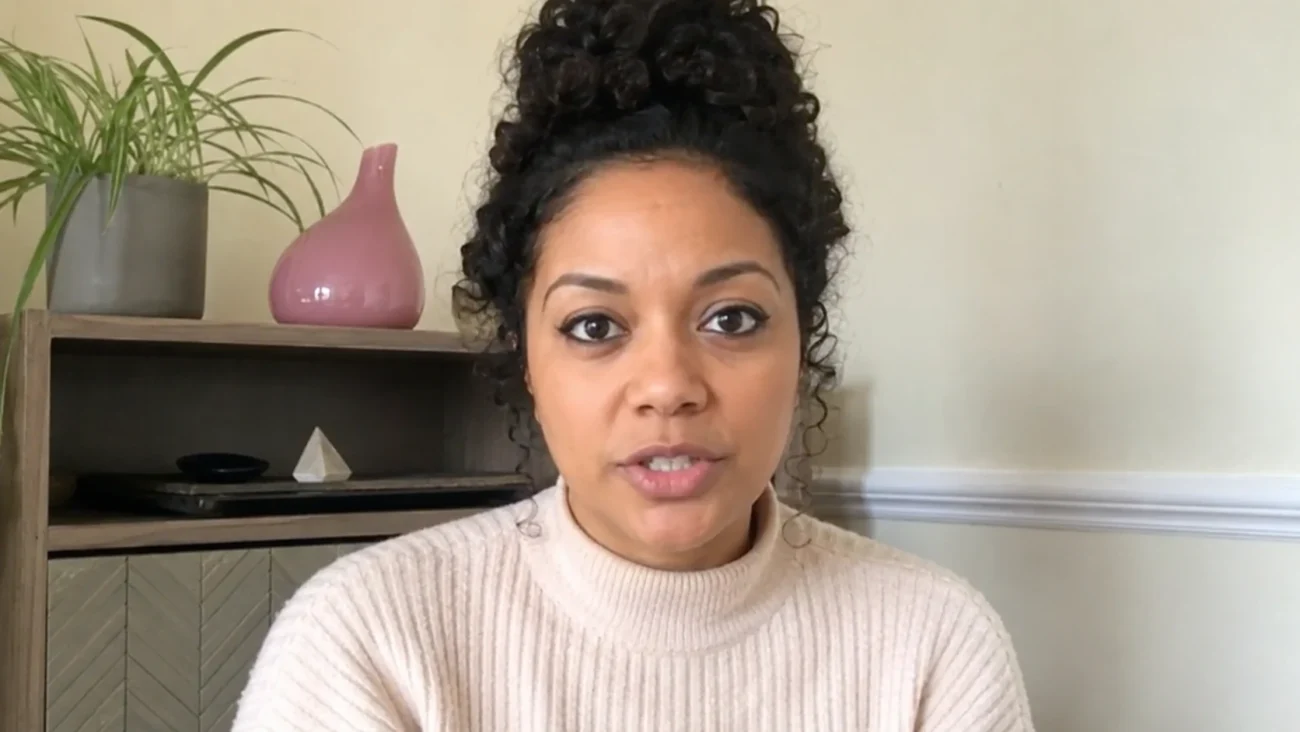
For most people, Yvette Amos entered public consciousness in a matter of seconds. During a January 2021 appearance on BBC Wales Today, viewers noticed an object on a shelf behind her while she discussed unemployment during the COVID-19 pandemic. The interview itself was serious and grounded in the economic reality facing many people across Britain at the time, but social media quickly shifted attention elsewhere. Screenshots spread across Twitter, entertainment sites, and international news outlets within hours, turning Amos into one of the most unexpected viral figures of the lockdown era.
Yet the internet’s version of Yvette Amos has often been narrower than the reality. Beneath the headlines and jokes was a woman connected to public-health research, community issues, and the lived experience of pandemic-era job insecurity. Unlike many accidental viral personalities, Amos did not try to turn the moment into celebrity status. She largely disappeared from the spotlight after the broadcast, which only increased public curiosity about who she really was.
Years later, people still search for her name because the story captures something specific about modern life. It reflects the collision between private space and public media, the speed of internet attention, and the way one unscripted television moment can permanently attach itself to an ordinary person. But here’s the thing. The most interesting part of the Yvette Amos story is not the viral screenshot itself. It is the contrast between how the public saw her and the much quieter reality behind the attention.
Early Life and Background
Publicly available information about Yvette Amos remains limited, which is unusual in an era where many people leave extensive digital trails. Unlike television presenters, actors, or influencers, Amos did not arrive with a public-facing brand or carefully managed biography. Most reliable reporting identifies her as being connected to Cardiff, Wales, and involved in research and community-related work before her brief moment of viral fame.
That absence of heavily documented personal detail has led to a large amount of speculation online. Various low-quality websites have attempted to fill the gaps with unverified claims about her age, family background, relationships, and income. Reliable publications, however, have largely avoided making unsupported assertions. The truth is that very little confirmed information exists about her childhood, parents, or private family life.
What can be said with confidence is that Amos appeared to belong to a generation of educated professionals whose work was disrupted by the pandemic. During her BBC Wales appearance, she discussed losing employment opportunities during COVID-19 restrictions, reflecting the economic uncertainty that affected many younger workers in hospitality, academia, and temporary employment sectors across the UK.
Education and Research Work
One reason the Yvette Amos story remains interesting beyond internet culture is her connection to academic and public-health research. Public records show her name attached to research projects linked with Cardiff University and alcohol intoxication management studies. Her most visible research credit appears in a National Institute for Health Research publication related to emergency and health-service responses to alcohol intoxication.
The study, titled Evaluating Alcohol Intoxication Management Services: The EDARA Mixed-Methods Study, explored how intoxication management services affected emergency departments, ambulance systems, and public safety. Amos appeared as a co-author among researchers connected with Cardiff University and related institutions. The work focused on real public-health concerns, including emergency service pressure and late-night city-centre safety.
Not many people know this, but research work of this kind often involves detailed field analysis, data gathering, interviews, policy evaluation, and cooperation with health services. It is rarely glamorous work, but it sits close to the everyday functioning of healthcare systems and local authorities. The existence of those research credits complicates the simplified image many people formed of Amos during the viral incident. She was not simply a random television guest. She had professional links to serious research work before the BBC appearance ever happened.
The BBC Wales Interview That Changed Everything
On 26 January 2021, Yvette Amos appeared on BBC Wales Today via video link from her home. The segment focused on unemployment and the difficulties facing people during the COVID-19 economic slowdown. Across Britain, remote interviews had become standard television practice due to lockdown restrictions, and viewers had become accustomed to glimpses into people’s homes, spare rooms, and improvised workspaces.
During the interview, viewers noticed an object positioned on a shelf behind Amos that appeared to resemble an adult toy. Social media users immediately clipped screenshots from the broadcast, and within hours the image had spread internationally. News organizations including The Independent, NDTV, and entertainment sites across Australia and the United States reported on the incident.
The speed of the reaction reflected the culture of lockdown media consumption. Millions of people were spending long hours online, watching remote interviews and participating in video calls themselves. Small visual details suddenly became part of public entertainment. Amos’s interview arrived at exactly the right moment for internet virality because it mixed a serious discussion with an accidental visual distraction that people found impossible to ignore.
What’s surprising is how quickly the original topic disappeared from the conversation. Amos had joined the program to discuss unemployment and economic hardship, but most online commentary focused entirely on the shelf behind her. The shift highlighted the strange imbalance of internet culture, where serious discussions can be overtaken instantly by a single visual moment.
Public Reaction and Internet Fame
The reaction to the interview was immediate and unusually global for a regional news segment. Twitter users circulated screenshots widely, while journalists and television personalities joked about the incident online. Some viewers speculated that the object had been intentionally placed, while others argued it was likely accidental or perhaps even a decorative item mistaken for something else.
Amos herself did not publicly fuel the conversation in a major way. Unlike many accidental internet personalities who capitalize on sudden attention, she did not launch a media campaign, pursue sponsorships, or actively extend the story through interviews. That restraint became part of the fascination surrounding her. People wanted to know more precisely because she remained largely silent afterward.
The internet’s response was also relatively mild compared to many viral controversies. Much of the reaction centered on humor rather than outrage. Viewers seemed to understand that remote broadcasting during lockdown created unusual situations and occasional embarrassing mistakes. The incident became more of a shared pandemic-era joke than a scandal.
That said, there was still a cost attached to the attention. Becoming internationally recognizable because of a few seconds of unintended television exposure is a strange experience for anyone, especially someone who had not sought celebrity status. Viral fame often removes context from people’s lives, flattening them into one endlessly repeated image or headline.
Life During the Pandemic
The timing of the Yvette Amos interview mattered enormously. Britain in early 2021 was deep into the social and economic disruption caused by COVID-19. Lockdowns had affected nearly every industry, and unemployment concerns dominated public discussion. Wales faced particular pressure in hospitality, retail, and service industries, sectors where many younger workers found employment.
During the interview, Amos spoke about difficulties securing work during this period. Reports connected her to both hospitality employment and research-related roles. Her situation reflected a broader national reality. Across the UK, many educated workers found themselves balancing temporary jobs, disrupted contracts, and uncertain career plans.
The pandemic also blurred the line between personal and professional life. Homes became offices, classrooms, studios, and television sets all at once. That environment created new forms of public exposure. Amos’s viral moment could probably only have happened during this specific historical period, when broadcasters relied heavily on home video interviews and audiences had become unusually attentive to domestic backgrounds.
There’s another reason the moment resonated. Many people saw themselves in it. Anyone who worked remotely during lockdown understood the fear of accidentally exposing something private during a professional call. The incident became funny partly because it felt plausible and familiar.
Media Coverage and Public Image
Media coverage of Yvette Amos followed a predictable modern cycle. At first, the focus centered almost entirely on the visual joke. Headlines emphasized the object visible on the shelf and the reactions it triggered online. International outlets repeated the story because it translated easily across audiences and required little political or cultural explanation.
But the coverage also revealed something about media habits during the pandemic. Journalists increasingly relied on viral clips to generate lighter stories amid heavy news cycles dominated by illness, death statistics, and economic collapse. The Amos interview offered temporary comic relief during an exhausting period of public anxiety.
Despite the global attention, Amos never fully transformed into a long-term media figure. She did not appear regularly on television afterward, and no major entertainment career emerged from the viral moment. That separated her from people who intentionally convert online fame into influencer careers or reality television opportunities.
Instead, her public image remained tied to one specific incident. In some ways, that preserved the humanity of the story. The internet briefly projected celebrity-level visibility onto someone who fundamentally remained a private citizen.
Private Life and Relationships
Reliable information about Yvette Amos’s relationships, marriage status, and family life is extremely limited. No confirmed public record establishes whether she is married, has children, or maintains a public partner relationship. Many websites have attempted to speculate about these topics, but few provide evidence from interviews, official statements, or trustworthy reporting.
That lack of information appears intentional rather than accidental. Amos has not cultivated a public celebrity identity, and there is little sign she sought extended media exposure after the BBC incident. In an age where many people document every aspect of life online, her relative privacy stands out.
The public’s curiosity about her relationships reflects a common pattern attached to viral fame. Once people recognize a face or name, they often assume there must be a complete celebrity-style biography behind it. But accidental public figures rarely fit neatly into that structure. Amos’s story remains defined by a brief moment of visibility rather than an ongoing public career.
The truth is that privacy can itself become part of a public image. By staying mostly outside the celebrity ecosystem, Amos avoided the cycle of constant commentary that often follows internet fame. That choice likely helped the story fade naturally instead of expanding into something more invasive.
Career and Professional Identity
Although most searches for Yvette Amos focus on the BBC Wales moment, her publicly documented work suggests a more serious professional identity rooted in research and public-health analysis. The EDARA study and associated research credits point toward involvement in health policy and emergency-services evaluation.
Research careers are often difficult to define publicly because much of the work happens behind institutional structures rather than through individual branding. Unlike actors or television presenters, researchers frequently contribute as part of teams and collaborative projects. Their names may appear in academic journals without broader public recognition.
What’s interesting is that Amos’s accidental fame briefly pulled that usually invisible work into public view. People who first encountered her through internet memes later discovered connections to legitimate health-service research. That contrast gave the story more depth than many short-lived viral moments.
Financial information connected to Amos also remains unclear. No credible public estimates exist regarding her net worth or earnings. Given the limited public record and absence of celebrity business ventures, any precise claims about wealth would be speculative. The safest assessment is that she worked primarily in research and related employment rather than entertainment or influencer industries.
Why the Story Endured
Most viral moments disappear quickly, but the Yvette Amos clip continues to circulate years later. Part of the reason lies in timing. The interview became attached to a highly specific cultural memory: lockdown life, remote work, and the awkward intimacy of video calls.
The clip also survives because it functions as a visual joke requiring almost no explanation. Even people unfamiliar with British television can immediately understand why viewers reacted the way they did. That simplicity helped the image spread internationally across platforms and languages.
But there’s another layer beneath the humor. The incident captured the vulnerability of modern digital life. Remote broadcasting exposed private environments to public judgment in ways that traditional television rarely did. Amos unintentionally became one of the defining examples of that shift.
Here’s where it gets interesting. Over time, the story evolved from simple internet humor into a small cultural artifact of the pandemic era. Looking back at it now reminds people not only of the joke itself but also of the strange emotional atmosphere of early 2021.
Where Yvette Amos Is Now
Publicly verified information about Yvette Amos’s current life remains limited. She has not maintained a highly visible media profile, and no major recent interviews or projects have attracted widespread attention. Unlike many viral figures, she appears to have returned largely to private life after the brief surge of international interest.
That absence from the spotlight may actually explain why public curiosity continues. People often expect internet fame to evolve into podcasts, television appearances, sponsorship deals, or influencer careers. Amos never followed that route. Instead, she became one of the relatively rare examples of a person who experienced global visibility and then stepped back from it.
There is also something refreshing about that choice. Viral fame can become addictive, especially when media attention creates sudden opportunities. Amos’s quieter path suggested either a deliberate refusal of celebrity culture or simply a preference for ordinary life away from public scrutiny.
As of now, the most reliable understanding of Yvette Amos is still rooted in the public record established during and before 2021. Beyond that, much of what circulates online remains speculation rather than confirmed fact.
Frequently Asked Questions
Who is Yvette Amos?
Yvette Amos is a Welsh woman who became internationally known after appearing on BBC Wales Today in January 2021. During the remote interview, viewers noticed an adult-themed object on a shelf behind her, and screenshots quickly went viral online. She was originally speaking about unemployment during the COVID-19 pandemic.
Why did Yvette Amos become famous?
She became famous because of the viral BBC Wales interview that spread widely across social media platforms. The unexpected background detail behind her during the live broadcast became the focus of internet discussion. The clip gained attention internationally within hours of airing.
What does Yvette Amos do for work?
Public records connect Amos to health and public-service research work linked with Cardiff University and alcohol intoxication management studies. She appeared as a co-author on research connected to emergency-service and healthcare systems. Reports during the pandemic also connected her to hospitality work affected by COVID restrictions.
Is Yvette Amos married?
There is no publicly confirmed information about Yvette Amos’s marital status or long-term relationships. She has kept most aspects of her private life away from public discussion. Many online claims about her personal relationships lack reliable sourcing.
Did Yvette Amos speak publicly after the viral interview?
There is little evidence of major follow-up interviews or public statements from Amos after the incident gained attention. She did not appear to pursue a celebrity or influencer career tied to the viral moment. That relative silence became part of the public fascination surrounding her story.
What was the object seen behind Yvette Amos?
Viewers believed the object resembled an adult toy, although online discussions also included speculation that it may have been decorative or misidentified. No widely verified explanation from Amos herself ever fully clarified the matter. Media coverage focused heavily on the ambiguity surrounding the object.
Where is Yvette Amos now?
Current verified details about Amos’s life remain limited. She appears to have returned largely to private life following the viral incident. No major public projects or entertainment ventures connected to her have emerged in recent years.
Conclusion
Yvette Amos occupies a strange place in modern media history. She was not a celebrity seeking attention, nor a public figure building a brand. Instead, she became famous because millions of people briefly looked at the wrong part of a television interview. That accidental visibility transformed her into a lasting symbol of lockdown-era broadcasting.
Yet reducing her story to a joke misses something important. Amos represented a generation dealing with unstable employment, disrupted careers, and the exhausting uncertainty of pandemic life. Her research connections and professional background reveal a person involved in serious work long before the internet turned her into a meme.
The fascination surrounding her also says something about the public itself. People remain drawn to stories where ordinary life collides unexpectedly with mass attention. Amos’s interview felt authentic precisely because it lacked polish. It captured the awkward reality of remote communication during a moment when homes had suddenly become public spaces.
Years later, Yvette Amos still matters less because of internet humor and more because her story reflects a broader cultural moment. She became memorable not through carefully planned fame, but through a fleeting reminder that modern media can turn almost anyone into a headline without warning.
