
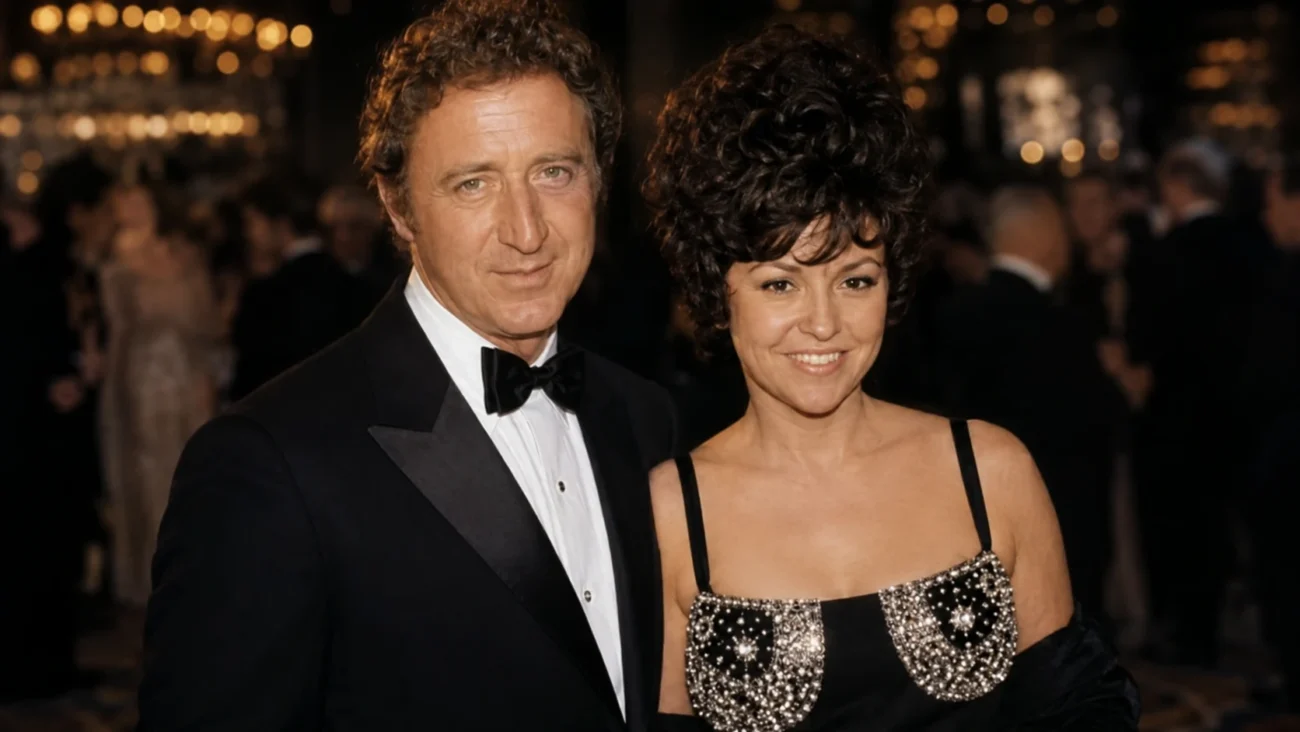
Mary Joan Schutz is remembered publicly for a relationship she did not build a career around and, by all appearances, never tried to turn into fame. She was Gene Wilder’s second wife, the mother of the daughter he adopted, and a private figure whose name remains tied to one of Hollywood’s most beloved comic actors. Her story is not a celebrity rise-and-fall tale, and it should not be treated like one. It is a quieter biography, shaped by marriage, family, public curiosity, and the limits of what can honestly be known.
That last point matters because Mary Joan Schutz has become the subject of many online profiles that say more than the record can support. Some repeat uncertain birth details, assign her a net worth, or describe her later life with a confidence that reputable sources do not justify. The verified facts are narrower but still meaningful. Schutz was part of Gene Wilder’s life during the years when he moved from promising actor to major screen presence, and her daughter Katharine became the only child he publicly acknowledged as his own through adoption.
Who Is Mary Joan Schutz?
Mary Joan Schutz is best known as the former wife of Gene Wilder, the American actor, writer, and director born Jerome Silberman in Milwaukee in 1933. Wilder became famous for performances in The Producers, Willy Wonka & the Chocolate Factory, Blazing Saddles, and Young Frankenstein. Schutz’s public identity comes mainly from her marriage to him, not from a public career of her own. She has no well-documented record as an actress, entertainer, political figure, author, or business personality.
The strongest established account places Schutz in Wilder’s life after his first marriage ended. Wilder had been married to actress Mary Mercier from 1960 until their divorce in 1965. Schutz later entered his circle and was described in biographical accounts as a friend of Wilder’s sister. Their relationship led to marriage in 1967, at a moment when Wilder’s film career was beginning to change sharply.
Schutz was already a mother when she married Wilder. Her daughter, Katharine, became central to the family story because Wilder adopted her after the marriage. That adoption is one of the clearest confirmed facts about Schutz’s life. It also explains why her name continues to appear in searches about Wilder, even decades after the marriage ended.
Early Life and Family Background
Mary Joan Schutz’s early life is not well documented in reliable public sources. Some online biographies give a birth year, birthplace, or family names, but those details often appear without strong sourcing. Because the available claims vary, they should be treated carefully rather than repeated as settled fact. What can be said with confidence is that she lived outside the entertainment spotlight before and after her marriage to Wilder.
This lack of public information is not unusual for a person who became known through marriage rather than through a public profession. Many former spouses of famous people leave only small traces in newspapers, public databases, memoirs, or entertainment references. In Schutz’s case, those traces are especially limited. The result is a biography that must be honest about blank spaces instead of filling them with speculation.
There is no verified public account that clearly establishes her childhood ambitions, education, schools, or early work. That does not mean those parts of her life were unimportant. It means they were not preserved in the same public record that follows actors, politicians, athletes, and executives. Any responsible profile of Mary Joan Schutz has to respect that difference.
Meeting Gene Wilder
Mary Joan Schutz is commonly described as having met Gene Wilder through his sister. The detail matters because it places the relationship in a family setting rather than a Hollywood publicity setting. Wilder, then building a serious acting career, had already experienced one marriage and divorce. Schutz, a mother, brought a different kind of family life into his world.
By the mid-1960s, Wilder was moving between stage work and screen opportunities. He had trained as an actor and was not yet the permanent fixture in American comedy that later audiences would remember. The years before his breakout were professionally demanding and personally unsettled. Schutz entered his life before the full weight of fame landed on him.
Their relationship appears to have developed quickly enough that marriage followed in 1967. That year became important for Wilder’s career because he appeared in Bonnie and Clyde, one of the defining American films of the decade. His role was not the largest in the film, but it helped introduce him to a wider movie audience. Schutz married him as that wider recognition was beginning.
Marriage to Gene Wilder
Mary Joan Schutz and Gene Wilder married on October 27, 1967. Their marriage came at the beginning of Wilder’s most important professional period. In 1968, audiences saw him in Mel Brooks’s The Producers, a film that later became one of the most admired screen comedies of its era. Wilder’s performance as Leo Bloom gave him an Academy Award nomination for best supporting actor.
Marriage to a rising actor can be both intimate and difficult. The public sees premieres, credits, and famous names, but spouses live with the travel, pressure, ambition, and uncertainty behind them. Schutz was married to Wilder while his career was changing from uncertain promise into real recognition. She was not a public co-star in that change, but she was part of his household during it.
The marriage also coincided with Wilder’s move toward roles that would define him for generations. In 1971, he starred as Willy Wonka in Willy Wonka & the Chocolate Factory. The film did not begin as the untouchable classic it later became, but Wilder’s performance gradually became one of the most recognizable in family film history. Schutz was his wife during that period of rising public attachment.
Katharine and the Adoption Story
The most important family fact about Mary Joan Schutz is her daughter Katharine. Katharine was Schutz’s daughter before her marriage to Wilder, and Wilder adopted her after he married Schutz. That adoption made Wilder a father in the legal and emotional sense recognized in standard biographies. It also gave Schutz’s family life a permanent place in Wilder’s public story.
Many quick biographies say that Gene Wilder had one child. That wording is incomplete unless it explains that Katharine was his adopted daughter. The distinction is not meant to diminish the relationship. It is simply the accurate way to describe the family structure.
For Wilder, adoption appears to have been a meaningful step, not a passing formality. Katharine carried the Wilder name in many references, and her later estrangement from him became one of the sadder parts of his personal history. For Schutz, the adoption linked her daughter to a man whose fame would eventually outgrow the private household they once shared. That connection has kept both mother and daughter in the orbit of public curiosity.
Life During Wilder’s Rise
The late 1960s and early 1970s were not quiet years in Gene Wilder’s career. After The Producers, he appeared in a run of projects that broadened his range and made his anxious, intelligent comic style instantly recognizable. He was not a conventional leading man, and that was part of his appeal. His characters often seemed frightened, tender, sharp, and unpredictable all at once.
Schutz’s marriage to Wilder unfolded against that professional acceleration. In practical terms, that meant living with a spouse whose work demanded long hours, creative intensity, and public attention. The marriage was not performed for television cameras or social media, because that celebrity world did not yet exist. Still, fame had its own pressures, and Wilder’s life was moving further into public view each year.
By 1974, Wilder had reached another major career peak. That year brought Blazing Saddles and Young Frankenstein, both made with Mel Brooks and both central to Wilder’s legacy. The timing is striking because 1974 is also the year most reliable accounts give for the end of his marriage to Schutz. In one year, his professional life was soaring while his family life was breaking apart.
Divorce and Family Estrangement
Mary Joan Schutz and Gene Wilder divorced in 1974. The marriage had lasted about seven years, which means it covered the transition from Wilder’s early screen breakthrough to his status as a major comic actor. Divorce records and biographical summaries give the basic timeline, but they do not fully explain the emotional life of the marriage. That is an important limit to keep in mind.
Public accounts often connect the breakup to tension around Wilder’s relationship with actress Madeline Kahn, his co-star in Young Frankenstein. Some versions say Katharine believed Wilder had been unfaithful, contributing to a lasting rupture between father and daughter. Those accounts are usually told through Wilder-centered sources rather than through Schutz or Katharine. The fair version is that the marriage ended, and Wilder’s relationship with Katharine later became estranged.
The estrangement deeply affected Wilder’s personal story. He later spoke and wrote about the pain of losing contact with Katharine. Still, the public should be cautious about assigning blame in a private family fracture. Schutz’s own full perspective has not been widely recorded, and Katharine’s privacy also deserves respect.
Was Mary Joan Schutz in Entertainment?
There is no solid public evidence that Mary Joan Schutz had a major entertainment career. She is usually identified in reference works and biographies only through her relationship to Wilder. Unlike Wilder’s other spouses Mary Mercier and Gilda Radner, Schutz does not appear in the public record as a known performer. Her life seems to have been lived largely outside show business.
This point is worth making because many celebrity biography pages try to turn every spouse into a public figure with a career category and income estimate. In Schutz’s case, that approach creates more confusion than clarity. There may have been work, ambitions, or private achievements that are not visible online. But a biography should not invent a career to make the story feel fuller.
Her importance comes from family history rather than professional fame. She was present during a defining stretch of Wilder’s life and was the mother of the child he adopted. That is enough to make her relevant to readers who care about Wilder’s biography. It does not require turning her into something the record does not show.
Money, Net Worth, and Public Claims
There is no credible public basis for a precise Mary Joan Schutz net worth figure. Many websites attach estimated fortunes to private people connected to celebrities, but those numbers are often unsupported. They may be based on guesswork, recycled claims, or assumptions about divorce settlements. Without court records, business records, or reliable financial reporting, such figures should not be treated as fact.
It is reasonable to assume that Schutz’s finances were affected in some way by her marriage and divorce from Wilder. But the size and terms of any settlement are not part of the commonly verified public record. Wilder himself became wealthy and successful over time, but that does not allow anyone to calculate Schutz’s personal finances. A former spouse’s net worth is not automatically knowable from the celebrity’s estate or career earnings.
The same caution applies to claims about her property, employment, or later income. Some articles present confident dollar amounts because search readers often ask for them. The better answer is less flashy but more honest. Mary Joan Schutz’s income sources and net worth are not reliably documented.
Public Image and Privacy
Mary Joan Schutz’s public image is unusual because it is built mostly from absence. She did not become a red-carpet fixture, give repeated interviews, write a memoir, or publicly define herself after the divorce. In a culture that often treats silence as mystery, her lack of visibility has made her seem more elusive than she may have intended. The truth may be much simpler: she chose, or was able, to live privately.
That privacy should not be mistaken for insignificance. Private people can still matter in the biographies of public figures. Schutz mattered to Wilder’s life as a wife and as the mother of the child he adopted. Her place in his story is real, even if her own full story is not available to strangers.
There is also a gendered pattern in how former wives of famous men are written about. They are often reduced to a marriage date, a divorce date, and a set of rumors. Schutz’s public record makes that risk especially clear. A respectful profile has to resist turning her into a footnote while also avoiding false drama.
Where Mary Joan Schutz Is Now
Mary Joan Schutz’s current life is not clearly documented in reliable public sources. Some websites speak of her as if her present circumstances are known, but they rarely provide strong evidence. Claims about her current location, age, health, or family status should be read with caution. There is no widely established public record showing that she maintains a public profile today.
This uncertainty can be unsatisfying, especially for readers used to quick answers. But private life often stays private for a reason. Schutz’s connection to Wilder gives the public a reason to ask about her, but it does not guarantee access to her later years. The absence of confirmed updates is not a gap that should be filled with rumor.
The most accurate statement is that Mary Joan Schutz appears to have lived outside public attention after her divorce from Wilder. She did not become part of the celebrity memoir circuit around Wilder’s fame. She also did not publicly compete with the later, more famous chapters of his personal life. That choice, whether deliberate or circumstantial, shaped how little is known about her now.
Gene Wilder’s Later Marriages and Why Schutz Is Often Overlooked
Mary Joan Schutz is often overshadowed in Gene Wilder’s biography by his later marriage to Gilda Radner. Wilder and Radner married in 1984 after meeting through their work in film, and their relationship became one of the best-known parts of his life. Radner’s death from ovarian cancer in 1989 deeply shaped Wilder’s later public identity. He became associated with cancer awareness and support efforts in her memory.
That later story is powerful, and it naturally receives more attention. Radner was a famous performer in her own right, loved for her work on Saturday Night Live. Her illness and death became part of a national conversation about cancer, grief, and advocacy. By comparison, Schutz’s marriage to Wilder was quieter and less documented.
But chronology matters. Schutz was there before that later chapter, during the years when Wilder’s screen identity was taking shape. She was part of the household before the Wonka role became a cultural monument and before Wilder became linked forever with Radner’s story. Her chapter is not as public, but it belongs in the timeline.
Why Mary Joan Schutz Still Matters to Readers
Mary Joan Schutz matters because biography is not only about the famous person at the center of the frame. The people close to a public figure often shape their life in ways that do not become fully visible. Schutz’s marriage to Wilder affected his family life, his role as a father, and the personal history behind his later reflections. Her presence helps readers understand Wilder as more than a collection of beloved performances.
Her story also shows the limits of celebrity knowledge. Modern search culture often rewards certainty, even when certainty is not available. Readers may arrive expecting a complete account of her childhood, career, marriage, money, and current whereabouts. What they find instead is a smaller but more truthful portrait.
That truth still has value. Mary Joan Schutz was not merely “Gene Wilder’s ex-wife,” though that is the reason most people know her name. She was a mother whose daughter became Wilder’s adopted child, and she was a spouse during a demanding and historic period of his career. Her life reminds us that some people connected to fame remain private, even when the internet keeps asking for them.
Common Misunderstandings About Mary Joan Schutz
One common misunderstanding is that Mary Joan Schutz was Gene Wilder’s first wife. She was his second wife. Wilder’s first wife was Mary Mercier, and his later wives were Gilda Radner and Karen Boyer. Schutz’s place in the sequence matters because it situates her in Wilder’s life before his most publicly remembered marriage.
Another misunderstanding is that Schutz and Wilder had a biological child together. The public record supports a different account. Wilder adopted Schutz’s daughter Katharine after marrying Schutz. That made Katharine his adopted daughter, not his biological daughter.
A third misunderstanding involves Schutz’s later life. Many online articles suggest that her current status, age, home, or net worth are firmly known. The stronger public record does not support that confidence. A careful reader should separate confirmed family facts from online guesses that have been repeated without proof.
Frequently Asked Questions
Who is Mary Joan Schutz?
Mary Joan Schutz is best known as the second wife of Gene Wilder. She married him in 1967, during the period when his film career was beginning to rise. Her daughter Katharine was adopted by Wilder after the marriage. Schutz herself did not maintain a widely documented public career.
Was Mary Joan Schutz an actress?
There is no strong public evidence that Mary Joan Schutz was a professional actress. She is mainly identified in biographies because of her marriage to Gene Wilder. Unlike some of Wilder’s other spouses, she was not a well-known public performer. Claims about an entertainment career should be treated carefully unless supported by reliable records.
Did Mary Joan Schutz have children?
Mary Joan Schutz had a daughter named Katharine before marrying Gene Wilder. After Schutz and Wilder married, Wilder adopted Katharine. Katharine is often described as Wilder’s only child, but the accurate description is that she was his adopted daughter. This family relationship is one of the most established facts about Schutz’s public biography.
When did Mary Joan Schutz and Gene Wilder divorce?
Mary Joan Schutz and Gene Wilder are generally reported to have divorced in 1974. They had married in 1967, so the marriage lasted about seven years. The divorce came during a major period in Wilder’s career, around the release of Blazing Saddles and Young Frankenstein. Public accounts give the timeline more clearly than they explain the private reasons.
Why did Gene Wilder become estranged from Katharine?
Public accounts say Wilder and Katharine became estranged after his marriage to Mary Joan Schutz ended. Some versions connect the rupture to suspicions and family pain surrounding the divorce. Because the story is mostly known through Wilder-centered accounts, it should be handled with care. Schutz’s own detailed account has not been widely recorded.
What is Mary Joan Schutz’s net worth?
Mary Joan Schutz’s net worth is not reliably documented. Online figures that claim to estimate her money should be treated as guesses unless they cite strong financial or legal records. Her income sources, divorce settlement details, and later financial life are not clearly part of the public record. The honest answer is that no credible exact figure is available.
Where is Mary Joan Schutz now?
Mary Joan Schutz’s current whereabouts and personal status are not clearly confirmed in reliable public sources. She appears to have lived privately after her divorce from Gene Wilder. There is no well-established evidence that she maintains a public career or public media presence today. That privacy is a major reason so much about her later life remains unknown.
Conclusion
Mary Joan Schutz’s biography is not a story of public fame. It is the story of a private woman whose life intersected with a famous man at a decisive point in his career. She became part of Gene Wilder’s family history through marriage and through his adoption of her daughter Katharine. Those facts are enough to explain why readers still search for her name.
The challenge is that the internet often wants more certainty than the record can provide. Schutz’s childhood, career, money, and present life are not documented with the same care as Wilder’s films or public interviews. A serious account should not pretend otherwise. Respecting the limits of the record is part of telling the truth.
What remains is still a meaningful portrait. Mary Joan Schutz stands at the edge of a famous Hollywood life, close enough to shape it and private enough to resist being fully absorbed by it. Her story reminds readers that not everyone connected to a celebrity belongs to the public forever. Sometimes the most accurate biography is one that knows where to stop.
