
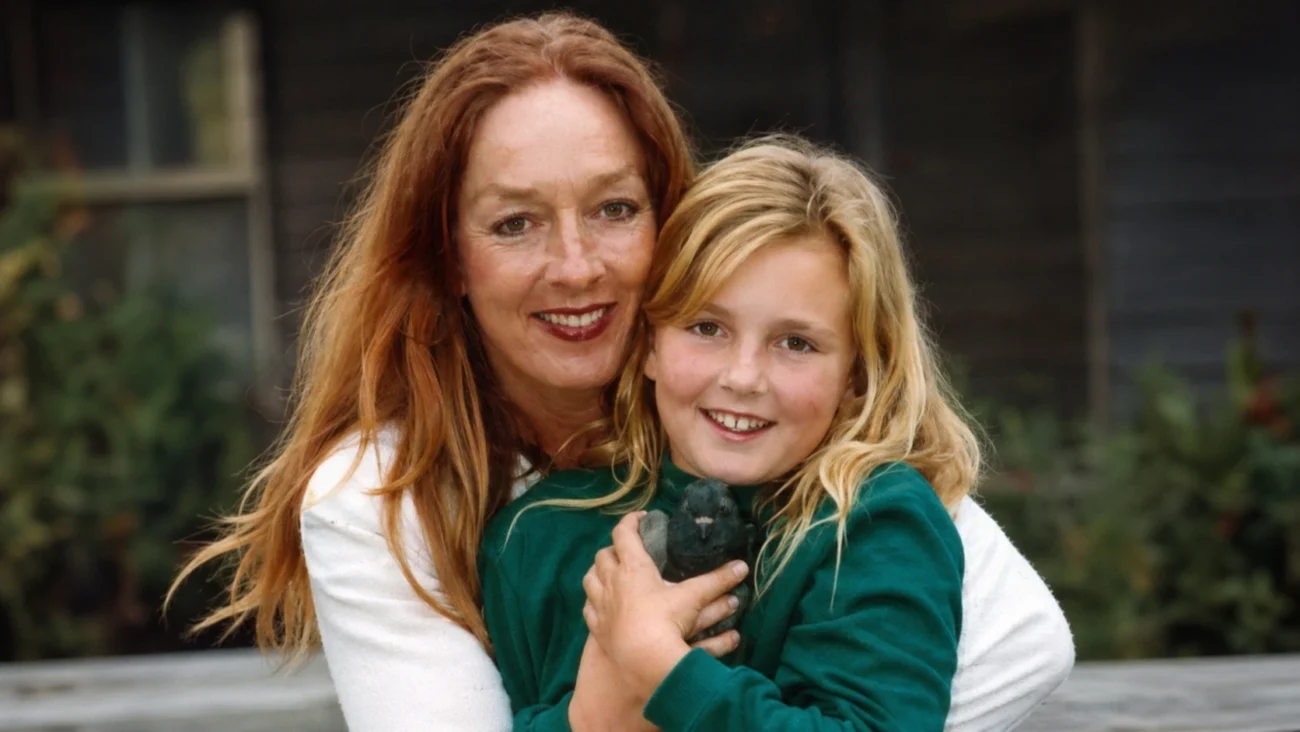
Felicity Tonkin’s name tends to surface in the margins of royal history, where private lives are often pulled into public view by association rather than choice. She is widely known as the daughter of New Zealand art teacher Heather Tonkin and Captain Mark Phillips, the Olympic equestrian who was once married to Princess Anne. That connection made her searchable, but it has never fully defined the life she appears to have built for herself. Today, she is better understood as Felicity Wade, an equine veterinarian in New Zealand whose adult identity is rooted in horses, family, and professional work far from palace publicity.
The public story around Felicity has always carried two competing threads. One is the tabloid-ready family connection: a child born outside Mark Phillips’s marriage to Princess Anne, later described as a half-sister to Peter Phillips and Zara Tindall. The other is quieter and more revealing: a woman who grew up in New Zealand, trained as a veterinarian, married into another equestrian family, and made a career in the demanding world of equine medicine. A fair biography has to hold both truths at once without turning her private life into spectacle.
Early Life and Family Background
Felicity Tonkin was born in New Zealand in the mid-1980s and is widely reported to have been born on 10 August 1985. Her mother, Heather Tonkin, was a New Zealand art teacher whose name became known internationally after she publicly identified Captain Mark Phillips as Felicity’s father. Phillips was already a famous figure by then, not only as an Olympic gold medal-winning equestrian but also as the husband of Princess Anne. Their marriage, which began in 1973, ended in divorce in 1992 after years of intense public attention.
The circumstances of Felicity’s parentage became public when she was still a young child. Reports from the early 1990s said Heather Tonkin sought recognition and financial support from Phillips, who was said to have denied paternity before DNA evidence was reported to have confirmed it. Because much of this history comes from press accounts rather than direct public statements from Felicity herself, the details should be handled with care. What is clear is that Felicity’s name entered the public record through a story she did not choose.
Her family background is often described through its royal connection, but that shorthand can mislead readers. Felicity is not Princess Anne’s daughter, and she is not a member of the British royal family. Her link to the royals comes through Mark Phillips, who had two children with Princess Anne: Peter Phillips, born in 1977, and Zara Tindall, born in 1981. That makes Felicity widely reported as their biological half-sister through their father, not through the royal bloodline.
Growing Up in New Zealand
Felicity’s upbringing appears to have been rooted in New Zealand rather than Britain. Professional profiles later described her as having grown up in Whitford, an area near Auckland known for its semi-rural character and strong equestrian culture. That setting matters because it gives context to the career she chose as an adult. Horses were not just part of a famous family connection; they were part of the world around her.
New Zealand’s equestrian circles are smaller and more practical than the society pages might suggest. Children who grow up around horses often learn early that glamour is only a small part of the picture. There are early mornings, injuries, muddy yards, expensive care, and the constant discipline of learning how animals move, heal, and perform. Felicity’s later career suggests that this everyday horse culture shaped her more deeply than distant royal headlines ever did.
Little has been publicly confirmed about her childhood schooling, friendships, or private family life. That absence should not be filled with guesswork. What can be said is that she developed an interest in riding and horses strong enough to guide her toward veterinary medicine. In a life often discussed because of who her father was, her education and career choices show a person building something of her own.
Education and Veterinary Training
Felicity Tonkin later became known professionally as Felicity Wade, BVSc, after qualifying as a veterinarian. She studied veterinary science at Massey University in Palmerston North, New Zealand’s best-known institution for veterinary training. Her professional biography states that she graduated in 2010 and received the equine prize in her final year. That detail points to both academic strength and a clear focus on horse medicine from the start of her career.
Veterinary training is a demanding path, especially for those who move into equine practice. It requires years of study in anatomy, physiology, diagnostics, surgery, pharmacology, reproduction, and clinical decision-making. Equine veterinarians also need the physical confidence to work around large animals, often in stressful conditions where owners, trainers, and riders are anxious for answers. It is not a career someone drifts into casually.
After graduating, Felicity joined Veterinary Associates Equine near the end of 2010. That move placed her in a specialist horse practice serving the Auckland region. Over time, her listed interests came to include poor performance in racehorses and sport horses, lameness, ophthalmology, and dentistry. These areas are technical and often require patient investigation rather than quick, dramatic solutions.
Building a Career in Equine Medicine
Felicity’s veterinary career is the most solidly documented part of her adult life. Veterinary Associates Equine identifies her as a veterinarian and director, which suggests both clinical responsibility and leadership within the practice. Her work sits in a field where reputation is built case by case, through accurate diagnosis, practical judgment, and trust from owners and trainers. For a private person whose name is often attached to old headlines, that professional record deserves serious attention.
Equine medicine covers a wide range of work, from emergency treatment and foal care to surgery, dentistry, pre-purchase exams, and performance assessments. A veterinarian focused on poor performance may be asked to identify why a racehorse is not finishing strongly or why a sport horse has become resistant under saddle. The answer may involve lameness, respiratory issues, dental pain, vision problems, muscular injury, or training-related stress. It is careful work because the visible symptom is often only the final clue.
Her interest in lameness is especially relevant in racehorse and sport-horse care. Lameness diagnosis can require gait analysis, nerve blocks, imaging, and a deep understanding of how small injuries affect movement. Ophthalmology and dentistry are also important in equine practice because eye pain and dental problems can change a horse’s behavior dramatically. These special interests suggest a veterinarian attentive to both performance and welfare.
The Mark Phillips Connection
Captain Mark Phillips is central to why Felicity Tonkin became a public name. Born in 1948, Phillips rose to prominence as a British eventing rider and won team gold at the 1972 Munich Olympics. The following year, he married Princess Anne in a ceremony watched by millions. Their life together placed him at the intersection of elite sport, aristocratic circles, and royal scrutiny.
Phillips and Princess Anne had two children, Peter and Zara, before their marriage ended in 1992. Zara Tindall later followed the family’s equestrian path and won an Olympic silver medal in team eventing at the London 2012 Games. Peter Phillips built a public profile of his own while remaining outside the duties of working royalty. Felicity’s connection to them is biological through Phillips, but her life has remained separate from their public identities.
The paternity story involving Heather Tonkin and Mark Phillips became public while Phillips’s marriage to Princess Anne was already under strain. Reports at the time turned the matter into a royal scandal, though Felicity herself was a child with no control over the publicity. That distinction is important. Adults made the decisions and headlines, while she became a name in a story written around her.
Is Felicity Tonkin Royal?
Felicity Tonkin is not royal, and that point is often misunderstood. She has no royal title, no official role, and no place in the royal line of succession. Her connection to the House of Windsor is indirect, through Mark Phillips’s former marriage to Princess Anne and through her reported half-sibling relationship with Peter Phillips and Zara Tindall. That makes her royal-adjacent in public curiosity, not royal in constitutional or family status.
The confusion is easy to understand because royal coverage often compresses family links into catchy phrases. Calling Felicity “Zara Tindall’s half-sister” is simpler than explaining how the relationship works. Yet the distinction matters because it shapes expectations. Felicity has not lived as a public royal, and there is no evidence that she has sought status from the connection.
Her life also shows how misleading inherited headlines can be. Someone can be connected to famous people without living inside their world. Felicity’s public record points toward New Zealand, veterinary medicine, marriage, motherhood, and equestrian practice. Those facts give a clearer picture than any attempt to cast her as a hidden royal figure.
Marriage and Children
Felicity is now publicly known as Felicity Wade, and professional sources identify her as married to Tristan Wade. Tristan is connected to the polo world and has been described as an international polo player based in the Auckland area. Their shared connection to horses gives their relationship a natural context beyond public curiosity about her birth family. In that sense, her married life appears to fit closely with the professional world she chose.
The couple are publicly described as having a son named James. Professional biographies mention Felicity spending time with her husband and young son, alongside interests such as riding, snowboarding, painting, and squash. These small details are modest, but they are more meaningful than many speculative claims because they come from professional contexts rather than gossip pages. They show a rounded adult life that is active, family-centered, and still tied to horses.
Not all details about her marriage and family are publicly confirmed, and that boundary should be respected. Some websites give dates for her wedding or her son’s birth, but not all provide strong sourcing. The reliable statement is that she is married to Tristan Wade and has a son named James. Beyond that, Felicity’s family life remains largely private.
Public Image and Media Attention
Felicity Tonkin’s public image has been shaped more by other people’s fame than by her own public actions. She does not appear to have built a media career, pursued celebrity status, or used royal interest as a platform. Most articles about her begin with Mark Phillips or Zara Tindall rather than with her veterinary work. That tells us as much about public appetite as it does about Felicity herself.
The media attention around her name has often been uneven. Some coverage treats her story as a scandal from the Princess Anne era, while other pieces present her as a “secret” or “forgotten” relative. Those labels can sound dramatic, but they risk flattening a real person into a curiosity. The more accurate picture is of someone whose parentage was once newsworthy and whose adult life has been mostly private.
Her public restraint may be one reason readers remain curious. In celebrity culture, silence is often misread as mystery. But privacy can simply mean that a person has chosen work and family over visibility. Felicity’s visible record suggests a woman who has allowed her professional life, not old headlines, to do most of the speaking.
Net Worth and Income Sources
There is no verified public figure for Felicity Tonkin’s net worth. Many celebrity-biography websites publish estimates for private people, but those numbers are rarely based on audited accounts, property filings, or confirmed income records. In Felicity’s case, any exact figure should be treated as an estimate unless backed by clear evidence. A responsible biography should not pretend that guesswork is fact.
What can be said is that her income sources appear to come from veterinary practice and business involvement. She has been listed as a director of Veterinary Associates Equine and Farm Limited, which indicates a leadership or ownership role in a professional veterinary business. Equine veterinary practices can be valuable businesses, but their value depends on assets, liabilities, revenue, staffing, facilities, and local demand. None of those details are enough, on their own, to calculate personal wealth.
Her husband’s connection to polo may also place the family within a high-cost equestrian environment, but that should not be confused with proof of wealth. Horses and polo often involve affluent networks, yet participation in that world does not automatically reveal private finances. The safest conclusion is that Felicity appears professionally established, but her personal net worth is not publicly confirmed. Anything more specific would be speculation.
Lesser-Known Details
One of the more telling details about Felicity is that her professional biography does not lean on her famous connection. It presents her as a local veterinarian who grew up around horses, studied at Massey, and developed clinical interests after entering practice. That choice of framing is revealing. If she wanted to build a public identity around royal curiosity, her professional profile could have looked very different.
Another meaningful detail is her continued link to hands-on equestrian life. Her biography mentions riding among her interests, while her husband’s world of polo suggests a household where horses are not only patients or business assets but part of daily culture. This continuity gives her life a shape that makes sense. From Whitford to veterinary school to equine practice, the horse world has been a steady line through her story.
Her interests outside work also complicate the narrow media image. Painting connects back, perhaps indirectly, to a childhood with an art-teacher mother, though that connection should not be overstated without her own confirmation. Snowboarding and squash suggest a person who values physical activity beyond riding. These details are small, but they help move the biography away from a single old headline.
Where Felicity Tonkin Is Now
Felicity Tonkin now appears to live and work in New Zealand under her married name, Felicity Wade. Her professional base is in equine veterinary care, with public records and practice materials identifying her as a veterinarian and director. She remains connected to the Auckland equestrian community through both work and family life. That current status is far more relevant to who she is today than the royal scandal that first made her name known.
There is no sign that she has sought a larger public role. She is not a frequent interview subject, a television personality, or a memoirist. Her privacy means readers will not find the same volume of material available for public royals or celebrities. But that absence is itself part of the story, because it shows a person who has not built her identity around public explanation.
The most respectful way to understand her present life is to recognize the balance she appears to have kept. She is linked to a famous family by birth, yet she works in a practical profession with daily responsibilities. She has a family of her own and a career that requires skill, endurance, and trust. In the public record, that is where Felicity Tonkin becomes more than a royal footnote.
Frequently Asked Questions
Who is Felicity Tonkin?
Felicity Tonkin is a New Zealand-born equine veterinarian who is also widely reported as the daughter of Heather Tonkin and Captain Mark Phillips. She is often searched because Phillips was formerly married to Princess Anne, making Felicity a reported half-sister of Peter Phillips and Zara Tindall. In her adult professional life, she is publicly known as Felicity Wade. Her career is based in equine veterinary medicine in New Zealand.
Is Felicity Tonkin Princess Anne’s daughter?
No, Felicity Tonkin is not Princess Anne’s daughter. Princess Anne and Mark Phillips had two children together, Peter Phillips and Zara Tindall. Felicity’s mother is Heather Tonkin, a New Zealand art teacher. Her connection to Princess Anne is indirect, through Mark Phillips’s former marriage.
Is Felicity Tonkin related to Zara Tindall?
Felicity Tonkin is widely reported as Zara Tindall’s biological half-sister through their father, Captain Mark Phillips. Zara is the daughter of Princess Anne and Mark Phillips, while Felicity is the daughter of Heather Tonkin and Phillips. That reported relationship has drawn public interest because Zara is part of the wider royal family. Felicity herself is not a royal and does not hold a title.
What does Felicity Tonkin do for a living?
Felicity Tonkin, professionally known as Felicity Wade, works as an equine veterinarian in New Zealand. Her listed clinical interests include racehorse and sport-horse performance, lameness, ophthalmology, and dentistry. She has also been identified as a director within a specialist equine veterinary practice. Her career shows a long-term commitment to horse health rather than public life.
Is Felicity Tonkin married?
Yes, Felicity Tonkin is publicly identified as married to Tristan Wade. Tristan Wade is associated with polo and the wider equestrian world, which connects closely with Felicity’s own professional background. Public profiles describe the couple as having a son named James. Further details about their family life are private and not widely confirmed.
What is Felicity Tonkin’s net worth?
Felicity Tonkin’s net worth is not publicly verified. Some websites publish estimates, but those figures should be treated cautiously because they do not show reliable financial evidence. Her known income sources appear to be veterinary practice and business involvement in equine veterinary services. The fair conclusion is that she is professionally established, but her personal wealth remains private.
Where is Felicity Tonkin now?
Felicity Tonkin appears to live and work in New Zealand under her married name, Felicity Wade. She is connected to equine veterinary practice in the Auckland region and maintains a private family life. Unlike many people linked to royal headlines, she has not turned that connection into a public platform. Her current life is best understood through her work, family, and place in New Zealand’s horse community.
Conclusion
Felicity Tonkin’s biography begins in public controversy, but it does not end there. The reason people search for her is clear: she is linked by birth to Captain Mark Phillips and, through him, to a family long watched by the British press. Yet the more complete story is not about palaces, titles, or inheritance. It is about a private person who grew into a professional life of her own.
What stands out is how little Felicity appears to have chased the attention attached to her name. She could have become a recurring figure in royal commentary, but the available record shows a different path. She studied veterinary science, entered equine practice, married, became a mother, and helped lead a specialist veterinary business. Those facts are steadier than the scandal that once surrounded her.
Her life also reminds readers that not every person near fame belongs to fame. Some people become public by accident, through family history or media hunger, and then spend adulthood choosing ordinary forms of purpose. Felicity Tonkin’s place in public memory may begin with a royal connection, but her present identity belongs much more to New Zealand, horses, veterinary medicine, and the private life she has worked to keep intact.
